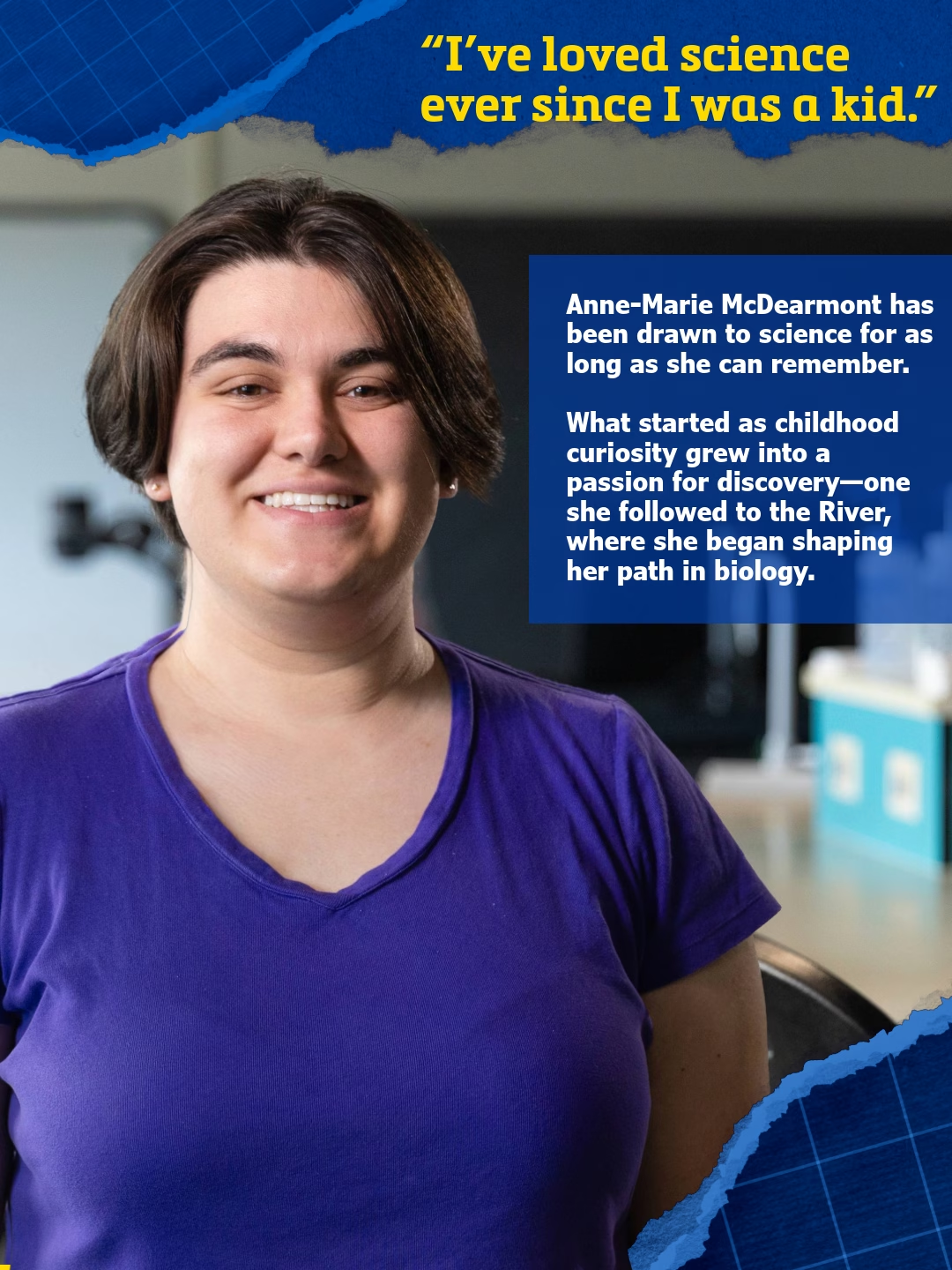
Annmarie McDearmont first visited Indian River State College (The River) as a child, drawn in by the planetarium. Years later, she came back as a student — and The River turned a childhood spark into a full-blown science career. This spring, she graduates with a bachelor’s degree in biology, two internships, and a research presentation on her record.
A Science Love Story, Starting Young
Annmarie loved science from the time she was a little kid. She once dreamed of becoming a veterinarian. Over time, though, her focus shifted from working with live animals to working in the lab — and The River’s broad biology curriculum gave her the room to make that discovery on her own terms. “Being here helped me explore different avenues so I could figure out that I wanted to be in the lab,” she says. The planetarium visit planted the seed. The biology program grew it.
A Smooth Path Through the Curriculum
Annmarie arrived at The River with some high school college credits already in hand. Her guidance counselors helped her navigate the scheduling gaps those credits created and set her up for a clean path forward. Once she entered her bachelor’s program, advisor Merle Litvack stepped in and made sure every semester lined up correctly. “She helped me organize my classes and kept me on course for graduation,” Annmarie says. The progression felt natural: general biology first, then molecular biology, organic chemistry, and the deeper science that defines the degree.
Faculty Who Showed Up
When the coursework got tough, Annmarie didn’t face it alone. Faculty across The River — including professors outside the sciences — made themselves available for office hours and personal tutoring sessions in the library labs. “That was definitely very beneficial for when I was having trouble in some classes,” she says. Even the transition from high school to college structure, which she describes as her biggest early challenge, became manageable through study groups, peer connections, and professors who responded every time she asked for help.
The STEM Pioneer Program: A Launchpad for Real Experience
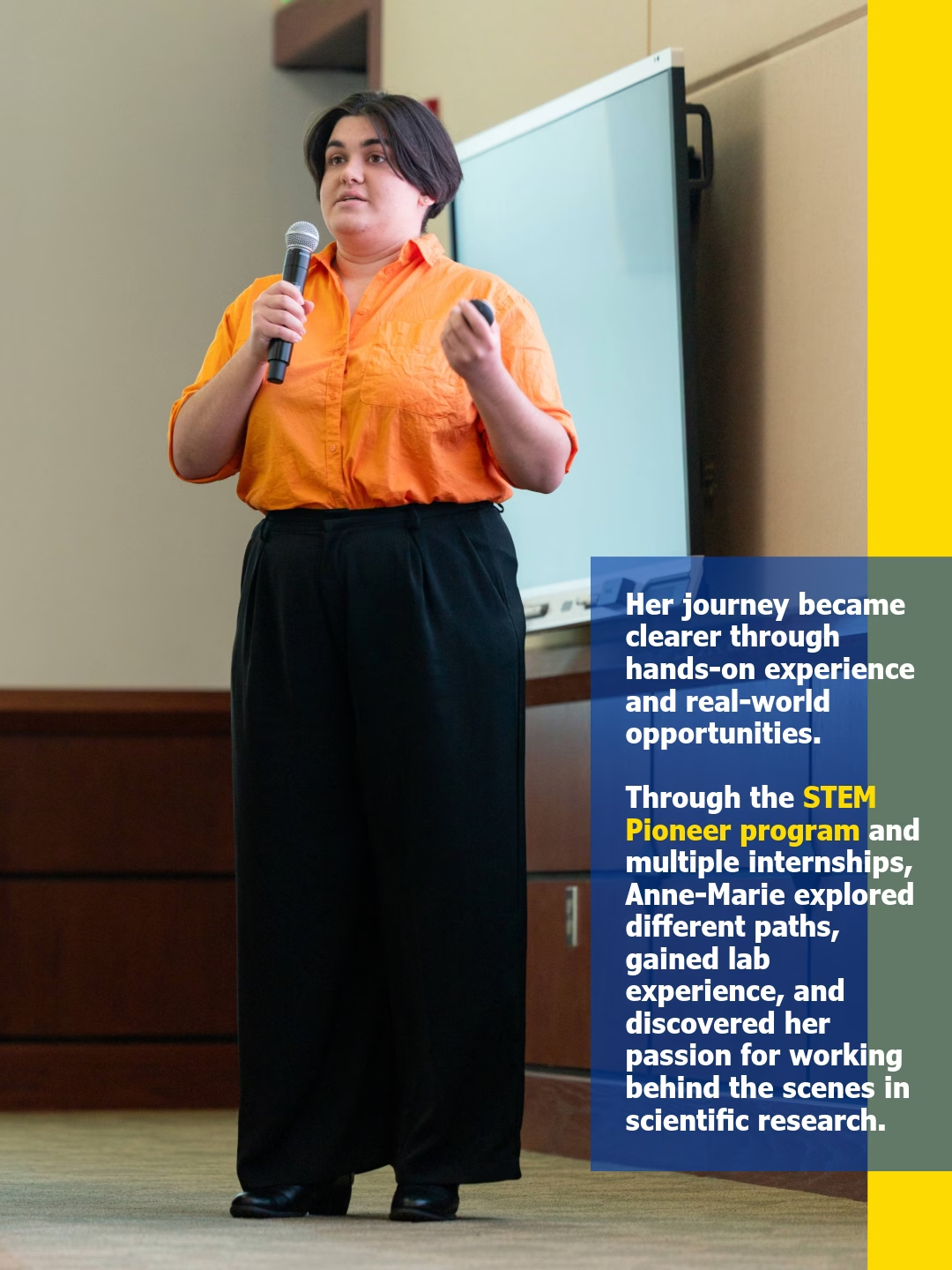
One of the most significant parts of Annmarie’s time at The River came through the STEM Pioneer Program. The program didn’t just build community — it opened doors to internship opportunities that most undergraduates never access. “Seeing familiar faces in all your classes and with your professors makes it very easy to form connections and study groups,” she says of the tight-knit STEM Pioneer community. But the internships changed her trajectory most.
Internship One: Engineering Mosquitoes in Vero Beach
During the first half of her bachelor’s program, Annmarie landed a volunteer-based internship through Merle and the STEM Pioneer Program at a lab in Vero Beach. There, she worked with live mosquitoes and injected mosquito eggs to create genetically engineered insects designed to control vector-borne diseases. “I got to work in an actual lab,” she says. The experience went straight onto her résumé and CV — and gave her a preview of what a real research environment feels like.
Internship Two: Pharmaceutical Research at FAU’s Center for Translational Sciences
For her senior capstone, Annmarie secured an internship at Florida International University’s Center for Translational Sciences — again through Merle. She works in a pharmaceutical lab three days a week, testing drugs and drug delivery systems alongside her principal investigator (PI) and postdoctoral mentor, Dr. Shafi. “The people I’ve met there, the environment — it’s been genuinely incredible,” she says.
Her PI involves her in every step of the research, from designing experiments to preparing presentations. Dr. Shafi works with her daily, answers her questions, and reviews her work. “It really helps you understand what it’s like to work in an actual lab,” Annmarie says.
Presenting Research as an Undergraduate
Before she walks across the commencement stage, Annmarie will have presented her capstone research at two venues: The River’s own Undergraduate Spring Science Symposium and the Center for Translational Sciences. Both presentations add to a CV that already stands out for a graduating bachelor’s student. “That’s another thing I can put on my CV,” she says with characteristic practicality.
The Classroom and the Lab: Two Sides of the Same Education
Throughout her internships, Annmarie kept noticing the same thing: what she learned at The River showed up directly in her lab work. “There were many times I would be doing something at the internship and remember learning about it in class that week,” she says. The connection ran both ways — lab experiences made classroom concepts click faster, and classroom learning made her a more capable intern. That feedback loop, she believes, defines what a strong science education looks like.
What’s Next: The Lab, and Maybe Graduate School
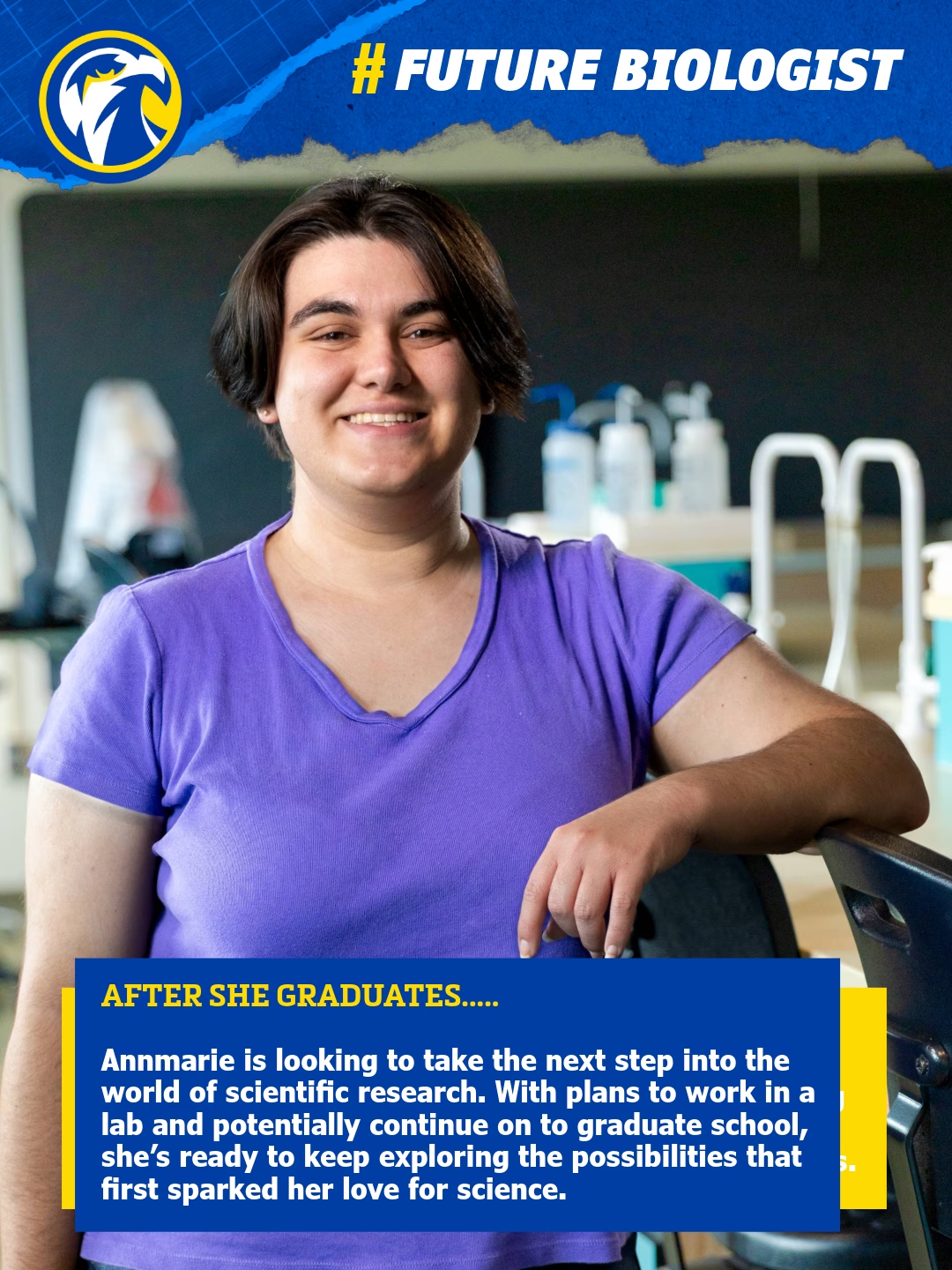
After graduation, Annmarie plans to enter the workforce in lab sciences — pharmaceutical research and biomedical sciences both interest her. Graduate school remains on the table, and her internship record gives her a strong foundation for either path. “There is a lot you can do with a biology degree,” she says. “That’s part of the reason I love it so much.” Walking across the stage will feel a little strange after 18 consecutive years in school — but mostly, she says, it will feel very, very good.
Grateful for the People Who Made It Possible
Annmarie thanks her parents for keeping her grounded through the stressful stretches, her closest friends Cassie and Riley for being her sounding board throughout the journey, and Merle Levac above all — the advisor and STEM Pioneer Program coordinator who connected her to every internship and kept her schedule on track from day one of her bachelor’s program. “She has just been so, so valuable to my experience here,” Annmarie says.
YOUR FUTURE’S IN MOTION.
ARE YOU?
College doesn’t have to be confusing or out of reach.The River gives you the clarity, support, and energy to move—on your terms.