The Indian River State College (IRSC) District Board of Trustees will hold its regularly scheduled monthly meeting on April 28, 2026, 1 p.m. In addition to the regular agenda, which may include, but is not limited to, business affairs, personnel matters, facilities items, and academic and student affairs, the District Board of Trustees will also consider changes to lab and testing fees.
Florida Statute 1009.23(12)(a) grants authority to Florida College System institutional boards of trustees to establish fees within a range allowed by state statute. These fees “shall not exceed the cost of services provided and shall only be charged to persons receiving the service.”
The proposed fees listed below are a result of a thorough review of the costs of every laboratory and course and reflect the costs of consumables, as well as pass-through fees for testing and insurance. All laboratory and course fees are used to purchase items specifically related to that courses’ student learning outcomes and course objectives.
The following chart highlights proposed per-course fee changes by term:
Indian River State College
Proposed Fee Changes – March 12, 2026
Effective term: Fall 2026
Lab Fee-per course charge
Course
Current
Proposed
MAC 1105 College Algebra
4.00
0.00
MAT 1033 Intermediate Algebra
6.00
0.00
MGF 1130 Mathematical Thinking
10.00
0.00
MGF 1131 Mathematics in Context
15.00
0.00
STA 2023 Elementary Statistics I
6.00
0.00
Insurance Fee–per course charge
Course
Current
Proposed
NUR 1021C Intro to Nursing Concepts 1
26.78
13.39
NUR 1034C Health-Illness-Concepts 2
0.00
13.39
NUR 2035C Health-Illness Concepts 3
0.00
13.39
NUR 2205C Nursing and Complex Health Concepts 4
0.00
13.39
NUR 3065C Nursing Assessment
0.00
13.39
NUR 4636C Community Health Nursing
26.78
13.39
NUR 4827 Leadership and Management in Professional Nursing
0.00
13.39
PRN 0933C Transition to Graduate Practical Nurse
0.00
13.39
PRN 0373C Practical Nursing Medical Surgical I
0.00
13.39
PRN 0374C Practical Nursing Medical Surgical II
0.00
13.39
NSP P933 IV Therapy
0.00
13.39
The estimated economic impact on all affected persons cannot be determined. Copies of the proposed fees are posted on the College website at irsc.edu.
Indian River State College complies with the provisions of the Americans with Disabilities Act. Individuals with disabilities requiring special accommodations or assistance to join the District Board of Trustees’ monthly meeting should call the President’s Office at 772-462-4763 with such need at least (3) business days in advance.
The River’s Programs Lead the Way in Preparing Students for High-Demand Careers
FORT PIERCE, FL (February 27, 2026) — Indian River State College joins educational institutions across Florida in celebrating Career and Technical Education (CTE) Month, advancing Florida’s mission to become the nation’s leader in workforce education.
Through innovative programs in advanced manufacturing, applied technologies, and a wide range of career and technical fields, the College continues to connect students with life-changing, high-wage career opportunities.
The state of Florida recently announced it reached #1 in workforce education in the country. According to a press release, during the 2024-25 academic year, Florida achieved record-breaking CTE enrollment, serving more than 818,000 K-12 CTE students and nearly 512,000 postsecondary CTE students, which represents a 30% increase since the 2018-19 academic year.
“Career and Technical Education opens doors to real opportunity — it provides a direct path from the classroom to a fulfilling, high-wage career,” said Indian River State College President Timothy E. Moore. “At Indian River State College, we are proud to offer CTE programs that meet students where they are and prepare them for where they want to go. Whether a student is pursuing a career in healthcare, advanced manufacturing, cybersecurity, or the culinary arts, The River has a program designed to get them there — often in two years or less. As Florida celebrates its achievement as the nation’s #1 state in workforce education, we are honored to play a leading role in that success right here in our community.”
CTE at Indian River State College can take the form of an A.S. degree, technical certificate, vocational certificate, or apprenticeship. The College offers 116 CTE programs spanning fields such as radiography, phlebotomy, dental hygiene, advanced manufacturing, culinary, hospitality, accounting, entrepreneurship, cybersecurity, public safety, automotive technology, welding, and HVAC.
Indian River State College’s CTE programs feature:
Industry-certified instructors with real-world experience
State-of-the-art training facilities and equipment
Partnerships with local employers for internships and job placement
Flexible scheduling options including evening and online classes
Career counseling and job placement assistance
Many programs can be completed in two years or less, with some offering certifications in as little as a few months. The College maintains strong relationships with local industry partners to ensure curriculum aligns with current workforce needs and emerging technologies.
To learn more about Indian River State College’s CTE programs, visit the college’s website at irsc.edu.
STEM · Hospitality & Culinary · Nursing & Health Sciences · Public Safety · Business & Cybersecurity · Workforce Education · Welding· Teaching
Fort Pierce, FL (February 24, 2026) — Indian River State College (The River) will host specialized Open House events this spring, giving prospective students a chance to explore career programs, tour facilities, meet faculty, and learn about financial aid and enrollment. All events are free, open to the public. Registration recommended. Free parking. ADA accessible.
STEM Open House March 25, 2026, 4:30 – 6:30 p.m. | Massey Campus, 3209 Virginia Avenue, N-117, Fort Pierce –Engineering technology, computer science, mathematics, and natural sciences. Tour specialized labs and meet faculty in high-demand technical fields.
Hospitality & Tourism, Culinary and Restaurant Management Open House March 25, 2026, 6–7:30 p.m. | Mueller Campus, 6155 College Lane, Bldg. C – Richardson Center, Vero Beach — Culinary arts, hotel management, restaurant operations, and event planning. Tour professional kitchens and meet award-winning culinary instructors.
School of Health & Human Sciences Open House April 6, 2026, 4:30 – 6:30 p.m. | Pruitt Campus, 500 NW California Blvd., Building G, Port St. Lucie –Registered nursing, practical nursing, dental hygiene, radiography, and more. Tour simulation labs with advanced medical training equipment.
Public Service Education Open House April 14, 2026, 4:30 – 6:30 p.m. | Treasure Coast Public Safety Training Complex, 4600 Kirby Loop Road, Fort Pierce — Law enforcement, fire science, EMS, and criminal justice. Tour fire training towers, tactical ranges, and emergency response facilities.
Business, Accounting & Cybersecurity Open House April 14, 2026, 4:30 – 6:30 p.m. | Massey Campus, 3209 Virginia Avenue, Building Y 102, Fort Pierce — Business administration, accounting, entrepreneurship, and cybersecurity. Learn about industry certifications and IT security career pathways.
School of Education (Teacher Preparation) Open House April 14, 2026, 4:30 – 6:30 p.m. | Massey Campus, 3209 Virginia Avenue, Building C, Fort Pierce – Join us to learn about the different pathways to becoming a teacher.
Workforce Education Open House April 16, 2026, 4:30 – 6:30 p.m. | Massey Campus, S 31st Street, 3209 Virginia Avenue, Building O, Fort Pierce — Skilled trades, project management, workforce training, and professional certifications. Explore flexible scheduling and industry partnership programs.
Welding Open House April 29, 2026, 6 – 8 p.m. | Massey Campus, 3209 Virginia Avenue, Building C, Fort Pierce — Whether you’re a high school student, career-changer, or welding enthusiast, this is your chance to spark a dynamic career! Connect with industry-expert instructors, explore program requirements, and discover how we can transform your career aspirations into real-world skills and opportunities.
Indian River State College serves Florida’s Martin, St. Lucie, Indian River, and Okeechobee counties, offering high-quality, affordable education to over 24,000 students annually through traditional and online courses. The College provides more than 130 programs leading to bachelor’s degrees, associate degrees, and technical certificates. Visit irsc.edu.
Indian River State College School of Health and Human Sciences to host Open House for prospective students.
PORT ST. LUCIE, FL (February 16, 2026) — Indian River State College School of Health and Human Sciences will host a free open house on April 6, 2026, from 4:30 to 6:30 p.m. at the College’s Port St. Lucie campus, 500 NW California Boulevard.
The event provides prospective students with comprehensive information about health and nursing education opportunities and career paths in the growing healthcare field. Attendees will tour a state-of-the-art simulation center, laboratories, and classroom facilities while meeting faculty and learning about curriculum offerings.
Comprehensive student support services will be showcased, including academic advising, financial aid counseling, scholarship information, and tutoring resources. Faculty members will be available to discuss specific program details and careers
The open house welcomes prospective students who are interested in exploring healthcare options, career changes, and high school students considering college programs. No prior registration fee is required.
The School of Health and Human Sciences offers a broad range of health-related programs:
Associate Degree in Nursing (RN)
Bachelor Degree in Nursing (RN-BSN)
Central Service Technology
Dental Hygiene
Healthcare Navigator Specialist
Healthcare Informatics Specialists
Health Services Management (AS Degree)
BS in Healthcare Management
Medical Assisting
Medical Coder/Biller
Medical Laboratory Technology
Nursing Assistant
Pharmacy Technician
Phlebotomy
Physical Therapist Assistant
Practical Nursing
Radiography
Respiratory Care
Surgical Services Technology
Event Details:
Date: Monday, April 6, 2026
Time: 4:30 – 6:30 p.m.
Location:Indian River State College, 500 NW California Blvd., Port St. Lucie, FL 34986
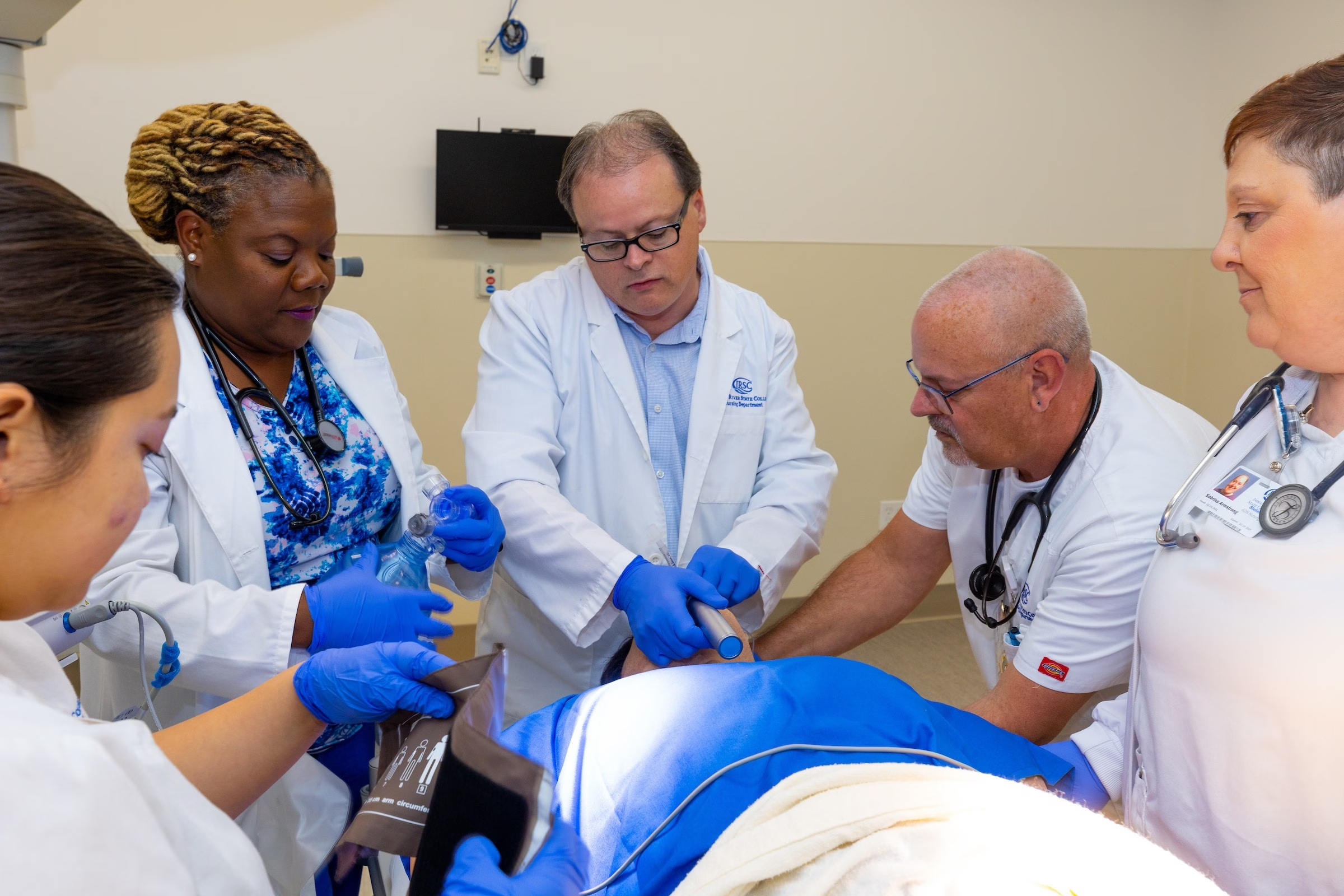
Healthcare professionals at Indian River State College engage in hands-on clinical training, practicing essential patient care procedures on a simulation mannequin.
Port St. Lucie, FL (February 10, 2026) – With less than three weeks until the February 28 deadline, Indian River State College (The River) School of Health and Human Sciences is reminding prospective nursing students that applications are still being accepted for its two nursing programs starting this summer.
The River is offering two distinct pathways for aspiring nurses at the College’s Pruitt Campus in Port St. Lucie:
The Practical Nursing Program offers a part-time, daytime schedule for individuals beginning their nursing careers, with completion possible in 1.5 years.
The Bridge to RN (Track Two) Summer 2026 program provides Licensed Practice Nurses, Registered Respiratory Therapists, and Licensed Paramedics with an accelerated path to earning their RN degree in just one year.
Both programs feature hands-on learning experiences, expert faculty instruction, and a supportive educational environment designed to prepare students for real-world healthcare challenges.
Fort Pierce, FL (February 3, 2026) — Indian River State College (The River) today announced an expanded partnership with Superhuman (formerly Grammarly) to deploy an agentic AI infrastructure across its campuses. This step makes The River the nation’s first open enrollment state college to implement a comprehensive, institution-wide AI strategy from Superhuman that embeds intelligent assistance into the familiar digital tools students, faculty, and employees already rely on for learning, teaching, and work. Building on a successful 2025 collaboration with Grammarly —Superhuman’s writing assistance platform—the new partnership leverages Superhuman Go, designed to enhance student learning, streamline faculty workflows, and modernize administrative operations.
“Our partnership with Grammarly has been transformative, and Superhuman Go represents the next evolution of that vision,” said Dr. Timothy E. Moore, President of Indian River State College. “AI is reshaping every industry, and our responsibility is both to equip students with the skills they need to thrive in this intelligence-driven economy and to transform our own operations to meet this moment. Colleges and universities won’t be able to position themselves for the future without working closely with AI experts who understand higher education.”
A Platform Built for Education
Superhuman Go creates a comprehensive ecosystem of AI agents, including those designed for specific academic and administrative workflows. As part of the partnership, the College will access seats for students and employees, and the ability to develop custom agents tailored to specific disciplines.
“Indian River State College is at a crossroads,” said Dr. Michael Hageloh, Executive Director of Strategic Initiatives. “Generative AI is rapidly transforming education from a literacy-based world to one built around dynamic intelligence. AI is becoming the infrastructure for knowledge work. We are choosing responsible integration, and Superhuman is the partner to get us there.”
Addressing a Critical Moment in Higher Education
The partnership comes as institutions nationwide grapple with integrating generative AI in ways that enhance rather than replace human capabilities. Superhuman Go embeds contextual, proactive AI assistance directly into existing workflows—from Canvas and Google Docs to email and administrative systems.
“We are excited to bring responsible, agentic AI to Indian River State College,” said Dr. Bruce Fraser, Executive Director of AI Initiatives. “Superhuman understands education and provides the technical expertise needed to empower educators for the AI era.”
The partnership prioritizes authentic, AI-augmented learning in support of student retention, engagement, and preparation for a workforce that increasingly expects graduates to use AI technology effectively and responsibly. This approach dovetails with a second commitment: upskilling College employees and utilizing Superhuman’s platform to transform business operations.
“Indian River State College represents the kind of forward-thinking institution that recognizes AI’s potential to transform open-access education,” said Jenny Maxwell, Head of Education at Superhuman. “Their commitment to being the first open enrollment state college in the nation to embrace our comprehensive agentic AI demonstrates true leadership. We’re co-creating a replicable model that institutions nationwide can adapt.”
As the first open enrollment state college to take this step, The River will participate in Superhuman’s Customer Advisory Board, contributing insights that will shape future AI capabilities for other colleges. The River and Superhuman plan to co-publish research findings, positioning The River as a national thought leader in AI integration for open-enrollment institutions.
The expanded partnership takes effect immediately.
###
About Indian River State College: Indian River State College serves Florida’s Martin, St. Lucie, Indian River, and Okeechobee counties, offering high-quality, affordable education to over 24,000 students annually through traditional and online courses. The College provides more than 130 programs leading to bachelor’s degrees, associate degrees, and technical certificates. Visitirsc.edu.
About Superhuman: Superhuman (formerly Grammarly) is the AI productivity platform on a mission to unlock the superhuman potential in everyone. The Superhuman suite of apps and agents brings AI wherever people work, integrating with over 1 million applications and websites. The company’s products include Grammarly’s writing assistance, Coda’s collaborative workspaces, Mail’s inbox management, and Go, the proactive AI assistant that understands context and delivers help automatically. Founded in 2009, Superhuman empowers over 40 million people, 50,000 organizations, and 3,000 educational institutions worldwide to eliminate busywork and focus on what matters. Learn more at superhuman.com.
Media Contact: Kathleen Walter or Howard Matzner, Indian River State College, 772.789.0821 PIO@irsc.edu
FORT PIERCE, FL (January 14, 2026) — The Indian River State College Foundation (Foundation) announces its academic scholarship application period for the 2026-2027 academic year is now open. The Foundation provides Indian River State College students access to millions in educational funding annually. Following a record-breaking year of awarding over $5 million in student scholarships and Promise Program support, the Foundation continues its commitment to making higher education accessible to students in the College’s service area of Martin, St. Lucie, Indian River, and Okeechobee counties.
Key Details:
Application Opens: Now for 2026-2027
Eligibility: New and returning Indian River State College students
Award Criteria: Multiple factors including academic achievement, career goals, financial need
Application Status: Open until all funds are awarded
“Education should never be out of reach due to financial constraints,” emphasizes the Foundation’s Executive Director, Annabel Robertson, Esq., CFRE. “Through these scholarship opportunities, we’re removing barriers and empowering students to pursue their academic dreams and career aspirations.”
The Foundation offers over 300 unique scholarships tailored to individual student needs and backgrounds. Awards consider various factors, including career and academic interests, academic achievement, community involvement, county of residence, financial need, and organizational affiliations.
Important Note: These scholarships are administered separately from The River’s Promise Program and represent additional funding opportunities for eligible students.
Complete scholarship profile with College email credentials
Students are strongly encouraged to apply early, as applications are evaluated on a rolling basis until all funds are distributed.
“These scholarships represent more than financial aid—they represent opportunity, accessibility, and our belief in every student’s potential,” adds Robertson. “We are invested in our students’ success and the future of our community.”
To learn more about the Indian River State College Foundation, scholarship opportunities, and how to support student success, visit giving.irsc.edu.
About Indian River State College Foundation: The Indian River State College Foundation provides educational opportunities through scholarships and program support. As the funding partner of Indian River State College, the Foundation works to ensure that quality education remains within reach for all students.
FORT PIERCE, FL (January 8, 2026) – Indian River State College is now accepting applications for its 2026 Promise Program, offering local high school graduates the opportunity to earn an associate degree with 100% of in-state tuition covered.
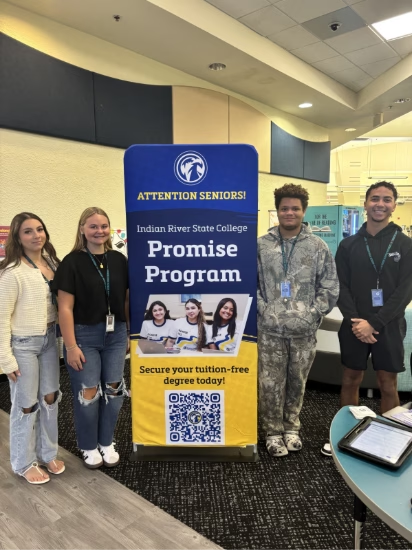
Indian River State College signed up its first 2026 Promise Program students at an event at Jensen Beach High School on January 7, 2026.
Program Overview
The Indian River State College Promise Program provides eligible 2026 graduates from public, charter, approved private, or in-district homeschool students in Indian River, Martin, Okeechobee, and St. Lucie counties with two years of tuition-free education leading to an Associate in Arts, Associate in Science, or Associate in Applied Science degree.
“This is your opportunity to pursue higher education without the burden of tuition costs,” said Dr. Timothy E. Moore, Indian River State College president. “If you’re graduating high school in 2026, I encourage you to apply today. The Promise Program can open doors to your future career, help you explore your interests, and let you earn a degree right here in your community. Don’t wait – take this step toward your goals.”
Program Highlights
Free Tuition: Covers 100% of in-state tuition for eligible students
Two-Year Completion: Students can earn their degree in six terms or less
No GPA or Income Requirements: Open to all qualifying 2026 graduates who meet program deadlines
Local Opportunity: Available to students from four counties in the Treasure Coast region.
Applications Now Open: Eligible students can apply today
How to Apply
Interested students should:
Apply to Indian River State College and select “Promise 2026” in their application. Applications can be completed on the College’s website at irsc.edu.
Submit the 2026-2027 FAFSA (school code: 001493) and Florida Residency Documents
Send official high school transcripts
Register for classes (minimum 12 credit hours)
Complete all requirements by July 13, 2026. Students are strongly encouraged to begin the application process early, as completing all required forms and documentation can take several weeks.
Promise 2026 Road Show
Indian River State College is bringing the Promise Program directly to students through the 2026 Promise Program Road Show, visiting high schools across the Treasure Coast throughout January. The Road Show will visit Martin County High School, Sebastian River High School, Indiantown High School, Indian River Charter High School, Vero Beach High School, Okeechobee High School, Jensen Beach High School, St Lucie West Centennial, Fort Pierce Central High School, South Fork High School, John Carroll High School, Clark Advanced Learning Center, Indian River Charter High School, and Somerset between January 8-29, 2026. Students can get information, ask questions, and receive application assistance during these campus visits.
Learn More
Prospective students and families are invited to watch a recorded information session to learn more about the Promise Program, eligibility requirements, application process, and student success resources.
While the Promise Program covers tuition, students should budget for additional college expenses including fees, books, supplies, technology, transportation, and living costs. Promise students must maintain satisfactory academic progress and complete renewal requirements each year to continue receiving funding.
Program Funding and Economic Impact
The Promise Program is funded through generous donor philanthropy and unrestricted investment proceeds managed by the Indian River State College Foundation. The program uses a “last dollar” funding model, covering any tuition costs remaining after financial aid and scholarships are applied.
By enabling more students to earn degrees in high-demand fields, the program helps develop a skilled workforce for the Treasure Coast region while allowing graduates to build careers without student debt.
About Indian River State College
Indian River State College serves students across Indian River, Martin, Okeechobee, and St. Lucie counties, offering associate degrees, bachelor’s degrees, and workforce training programs. The College is committed to providing accessible, affordable higher education to the Treasure Coast region.
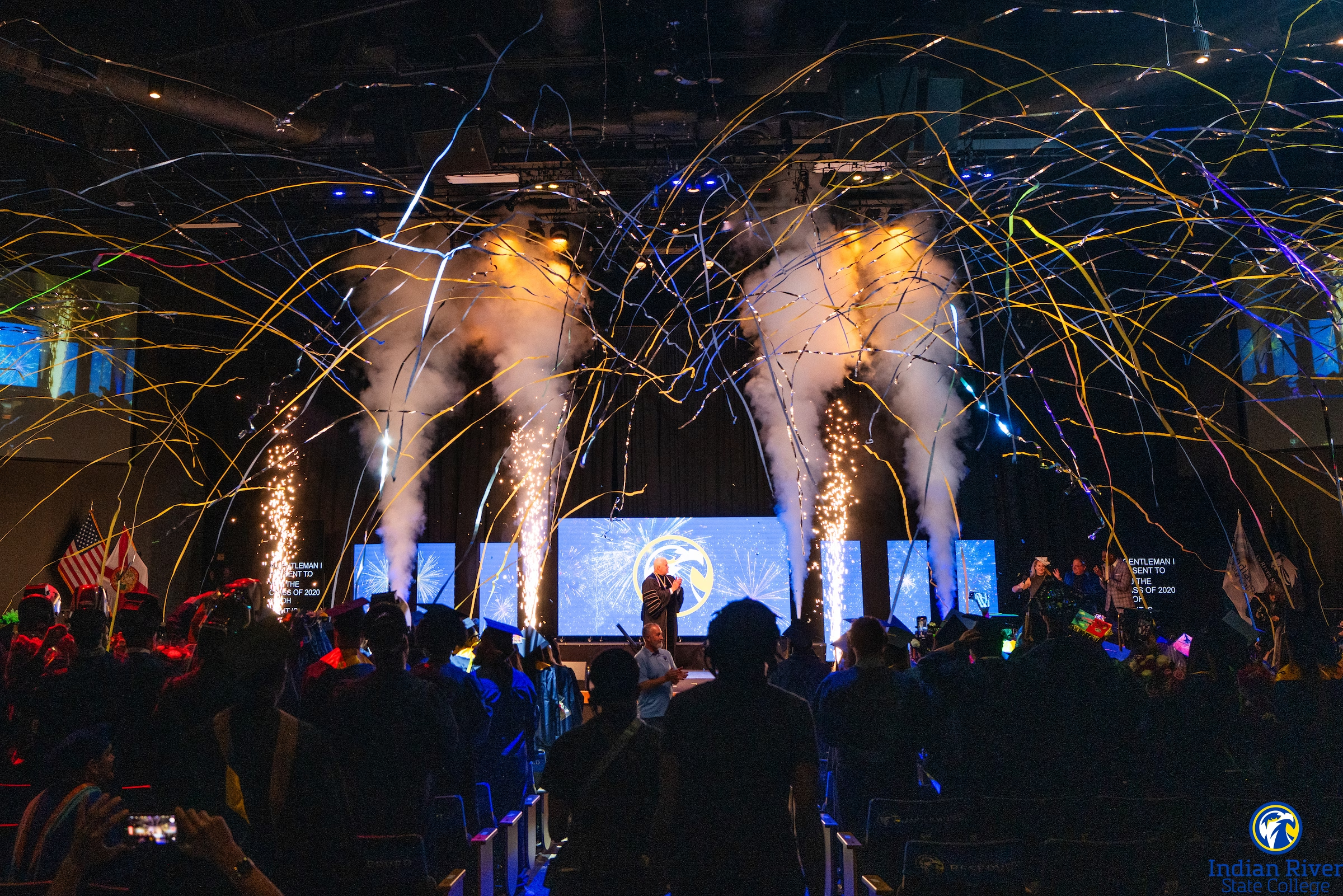
Commencement day at The River—where graduates celebrate their accomplishments and the bright futures ahead
Key Facts:
2,076 degrees and awards expected to be conferred in Fall 2025
428 credentials expected to be conferred to Program students, debt-free
1,862 total Promise Program credentials awarded since 2022
Ceremonies held December 17-18, 2025, at Westside Center, Fort Pierce, Florida
FORT PIERCE, FL (December 18, 2025) –Indian River State College (The River) celebrated the accomplishment of approximately 2,076 degrees and certificates completed by Fall 2025 graduates during commencement ceremonies held December 17 and 18, 2025, at the Westside Center in Fort Pierce, Florida. The festive ceremonies honored students who completed programs across academic and technical fields, including Promise Program students who earned 428 debt-free credentials.
About the Graduates
The Fall 2025 graduating class represents students from Indian River County, Martin County, Okeechobee County, and St. Lucie County across Florida’s Treasure Coast. Many graduates are the first in their families to earn a college degree, while others are advancing their careers through technical certifications and specialized training programs. Many Gold Star and Blue Star Families, as well as graduating veterans and active-duty service members, were also recognized.
“Commencement is one of the most exciting days of the year for our entire college community,” said Dr. Timothy E. Moore, President of Indian River State College. “Watching our students walk across that stage—many who never thought college was possible—is a powerful reminder of what dedication and opportunity can achieve together. This is their moment, and we’re thrilled to celebrate it with them and their families. Congratulations to our graduates!”
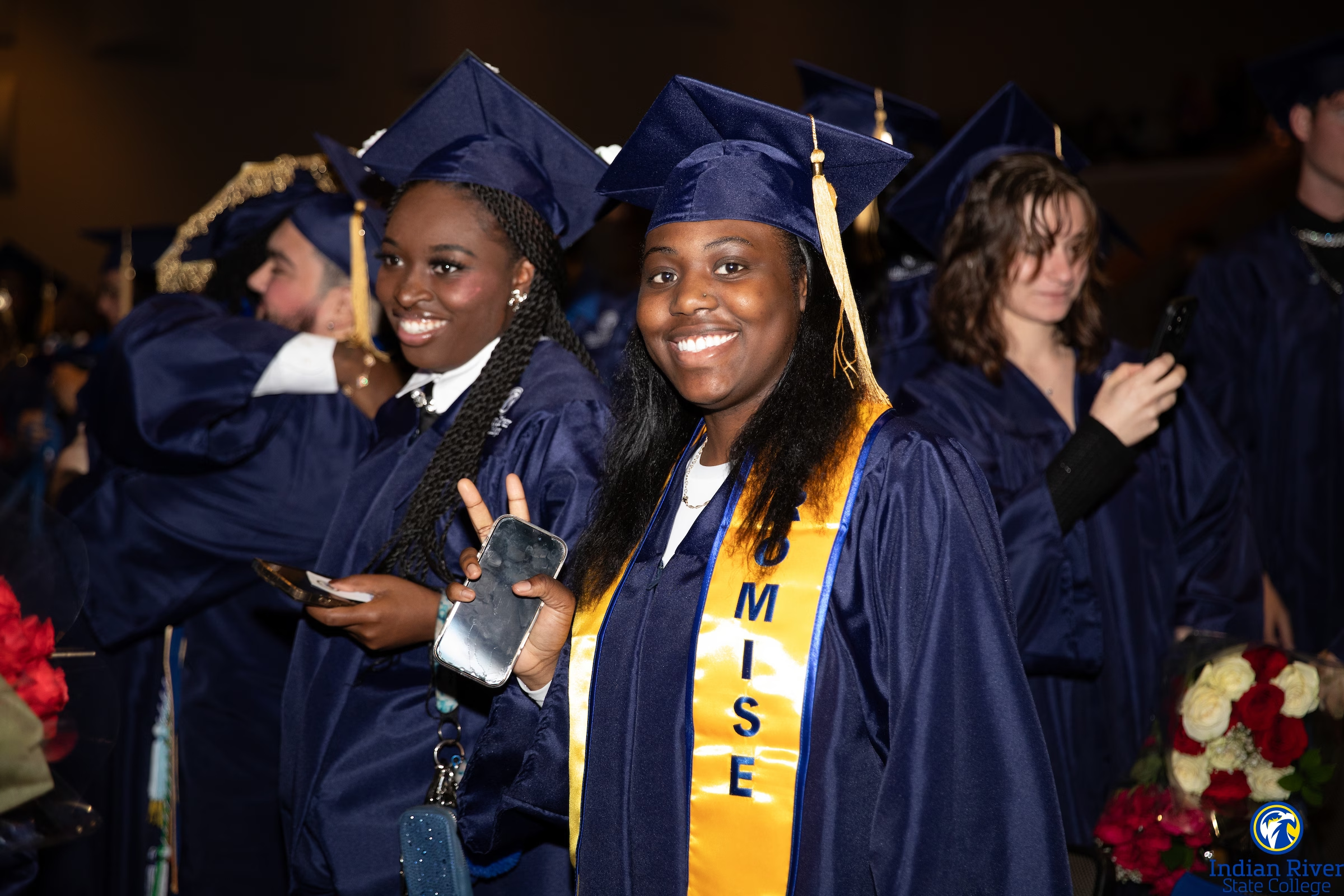
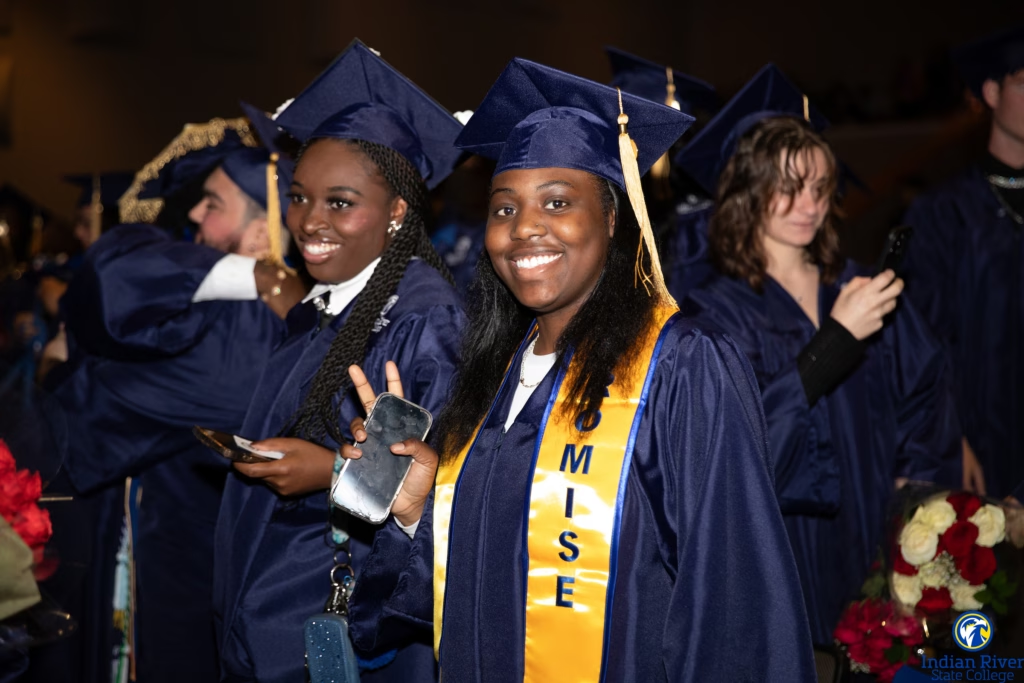
Celebrating success! Graduates share smiles and excitement during Indian River State College’s Fall 2025 commencement ceremony, marking the achievement of their academic goals.
Promise Program Impact
The Indian River State College Promise Program allows eligible students to graduate tuition-free without student debt. Since launching in 2022, the Promise Program has awarded 1,862 credentials.
The Promise Program is sponsored by the Indian River State College Foundation and funded through donor philanthropy. The program removes financial barriers to higher education.
“The Promise Program is more than financial support—it’s a promise kept to our community that college education will be accessible for qualifying students,” said Annabel Robertson, JD, CFRE, Vice President of Institutional Advancement for the Indian River State College Foundation. “Thanks to our generous donors, we are changing the trajectory of families and strengthening the economic vitality of the entire Treasure Coast region.”
“EveryPromise graduate we celebrate today is a testament to what is possible when we invest in our students,” said Beth Gaskin, Vice President for Student Success at Indian River State College. “These are success stories and proof that when we remove financial barriers, talent and determination can flourish. Our graduates are now teachers, nurses, business leaders, and public servants making an immediate impact in our community.”
Workforce Development and Community Impact
Indian River State College serves as the primary workforce pipeline for the Treasure Coast, preparing graduates for careers in healthcare, education, business, technology, and public service. River graduates fill critical positions at local hospitals, schools, businesses, and government agencies across Indian River, Martin, Okeechobee, and St. Lucie counties.
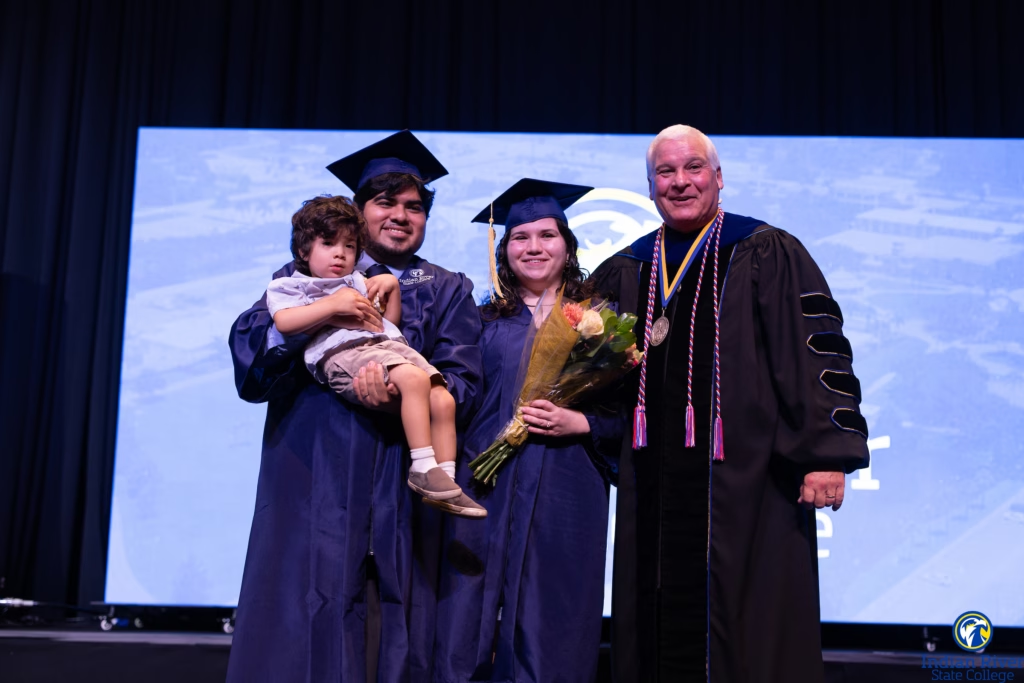
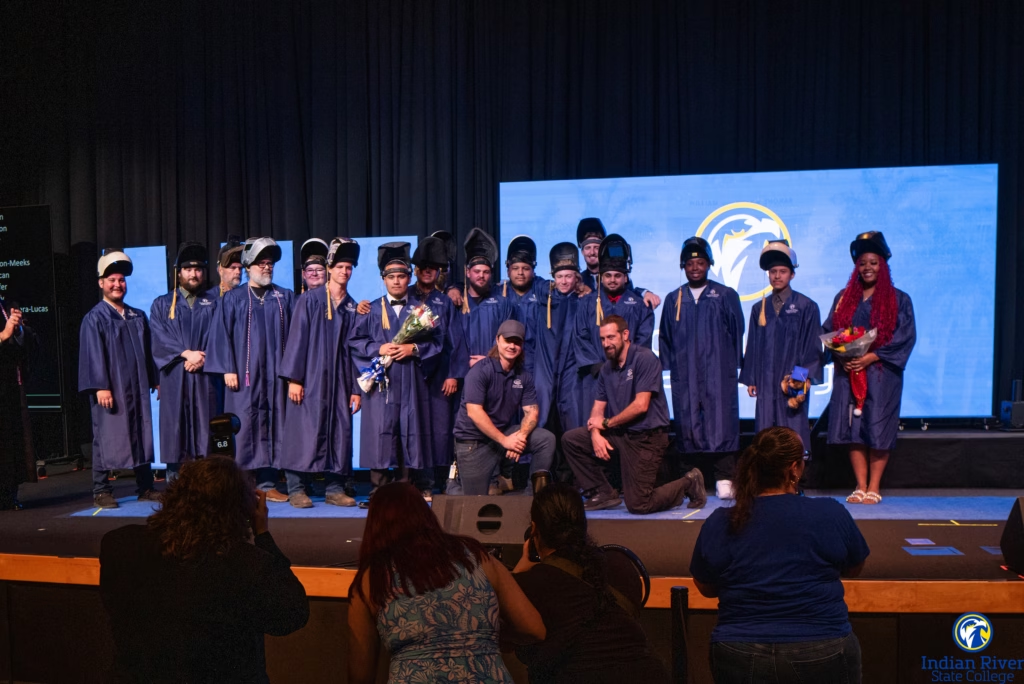
A proud moment on stage as graduates in blue caps and gowns celebrate their achievement alongside faculty and staff at Indian River State College’s Fall 2025 commencement
“These graduates represent the heart of our mission—removing barriers to education and creating opportunities for every student to succeed,” said Dr. Heather Belmont, Indian River State College Provost. “Watching them achieve their dreams reminds us why we do this work every single day.”
The Fall 2025 graduating class includes numerous first-generation college students who are the first in their families to earn college degrees.
Commencement Ceremony Details
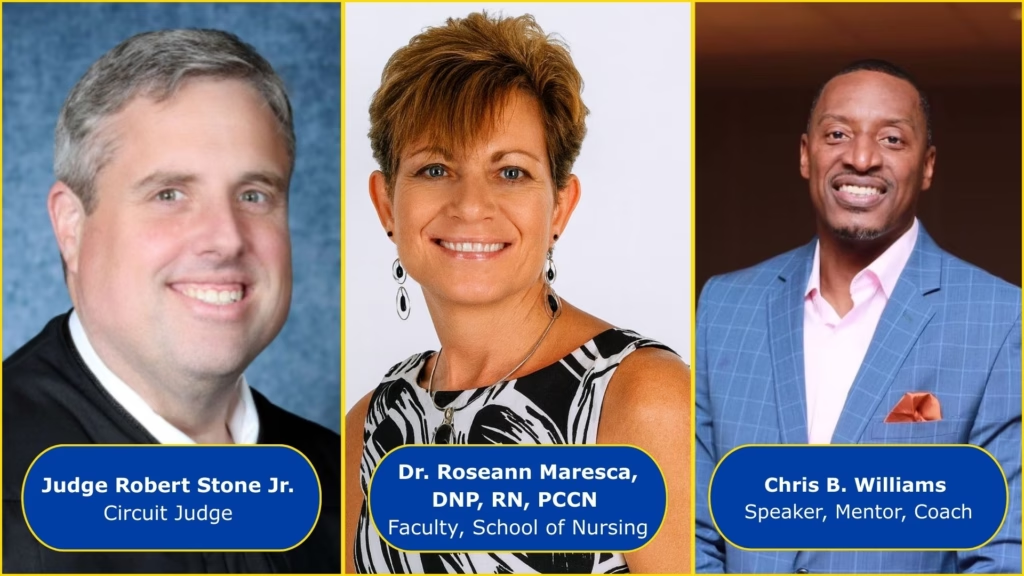
Indian River State College held four commencement ceremonies at the Westside Center in Fort Pierce on December 17-18, 2025, featuring speakers Chris B. Williams (positive energy coach and motivational speaker) for Associate Degrees and Certificates, The Honorable Robert Stone (Judge and River alumnus) for Bachelor’s Degrees, and Roseann Maresca, DNP (Assistant Professor at The River) for Nursing Degrees with Traditional Pinning.
Nursing Pinning Ceremony
The December 18 nursing ceremony included a traditional pinning ceremony before diploma presentation. The nursing pinning ceremony is a time-honored tradition symbolizing the commitment nursing graduates make to patient care and the nursing profession.
Distinguished Speakers and Flag Bearers
Roseann Maresca, DNP, MSN, RN, PCCN, addressed nursing graduates. Dr. Maresca is an Assistant Professor at Indian River State College with nearly a decade of nursing education experience and over 17 years of critical care nursing expertise at Martin Memorial Health Systems. She prepares nursing professionals to serve healthcare facilities across the Treasure Coast region.
Judge Robert Stone serves on the Nineteenth Judicial Circuit Court and is an Indian River State College alumnus. Judge Stone earned his bachelor’s degree from Indian River State College before obtaining his juris doctor from Barry University School of Law. Governor Ron DeSantis appointed Judge Stone to the bench in October 2025.
Chris B. Williams is a positive energy coach and motivational speaker, who inspires audiences with his approach to personal and professional growth.
Fort Pierce, FL (December 15, 2025) – The Indian River State College (IRSC) District Board of Trustees will hold its regularly scheduled monthly meeting on January 27, 2026 @ 1 p.m. In addition to the regular agenda, which may include, but is not limited to, business affairs, personnel matters, facilities items, and academic and student affairs, the District Board of Trustees will also consider changes to lab and testing fees.
Florida Statute 1009.23(12)(a) grants authority to Florida College System institutional boards of trustees to establish fees within a range allowed by state statute. These fees “shall not exceed the cost of services provided and shall only be charged to persons receiving the service.”
The proposed fees listed below are a result of a thorough review of the costs of every laboratory and course and reflect the costs of consumables, as well as pass-through fees for testing and insurance. All laboratory and course fees are used to purchase items specifically related to that courses’ student learning outcomes and course objectives.
The following chart highlights proposed per-course fee changes by term:
Effective term: Summer 2026
Laboratory Fee–per course charge
Course
Current
Proposed
CJE 1325 Foundations of Law Enforcement Leadership
135.00
0.00
CJK 0002 Introduction to Law Enforcement
290.00
105.00
CJK 0300 Introduction to Corrections
215.00
56.00
FFP 0030 Fire Fighting Academy I
800.00
575.00
FFP 0031 Fire Fighting Academy II
1425.00
820.00
PMT 0101C Advanced Welding Principles
0.00
125.00
PMT 0108 Introduction to Welding
100.00
180.00
PMT 0121 Shielded Metal Arc Welding Principles
100.00
255.00
PMT 0122L Shielded Metal Arc Welding – Advanced
100.00
320.00
PMT 0131 Gas Metal Arc Welding Principles
100.00
205.00
PMT 0134 Gas Metal Arc Welding
150.00
290.00
PMT 0138L Gas Tungsten Arc Welding – Advanced
200.00
270.00
PMT 0164 Welding Fabrication Fundamentals
100.00
235.00
Insurance Fee-per course charge
MEA 0200C
13.39
0.00
Testing Fee-per course charge
RTE 2061 Radiographic Seminar
0.00
130.00
Effective term: Fall 2026
Laboratory Fee–per course charge
Course
Current
Proposed
CHM 2210L Organic Chemistry I Lab
75.00
100.00
CHM 2211L Organic Chemistry II Lab
75.00
100.00
PHY 1053L College Physics I Lab
50.00
60.00
PHY 1054L College Physics II Lab
50.00
60.00
PHY 2048L Physics with Calculus I Lab
50.00
60.00
PHY 2049L Physics with Calculus II Lab
50.00
60.00
BCH 4053L Biochemistry I Lab
75.00
100.00
BSC 2085L Anatomy & Physiology I Lab
75.00
60.00
BSC 3465L Biotechnology II Laboratory
75.00
100.00
ISC 4911L Senior Capstone II
75.00
100.00
MCB 2010L Microbiology Lab for Health Sciences
75.00
100.00
MCB 3023L General Microbiology Laboratory
75.00
100.00
PCB 3063L Introduction to Genetics Laboratory
75.00
100.00
PCB 4023L Cell Biology & Physiology Laboratory
75.00
100.00
PCB 4043L General Ecology Laboratory
75.00
50.00
PCB 4701L Human Physiology Lab
75.00
100.00
ZOO 3733L Human Anatomy Laboratory
75.00
100.00
MLT 1440C Parasitology & Mycology
100.00
150.00
MLT 2400L Medical Microbiology Lab
200.00
300.00
The estimated economic impact on all affected persons cannot be determined. Copies of the proposed fees are posted on the College website at irsc.edu.
Indian River State College complies with the provisions of the Americans with Disabilities Act. Individuals with disabilities requiring special accommodations or assistance to join the District Board of Trustees’ monthly meeting should call the President’s Office at 772-462-4763 with such need at least (3) business days in advance.
Cookie Consent
We use cookies to improve your experience on our site. By using our site, you consent to cookies.
This website uses cookies
Websites store cookies to enhance functionality and personalise your experience. You can manage your preferences, but blocking some cookies may impact site performance and services.
Essential cookies enable basic functions and are necessary for the proper function of the website.
Name
Description
Duration
Cookie Preferences
This cookie is used to store the user's cookie consent preferences.
30 days
Google Tag Manager simplifies the management of marketing tags on your website without code changes.
Name
Description
Duration
cookiePreferences
Registers cookie preferences of a user
2 years
td
Registers statistical data on users' behaviour on the website. Used for internal analytics by the website operator.
session
These cookies are used for managing login functionality on this website.
Name
Description
Duration
wordpress_logged_in
Used to store logged-in users.
Persistent
wordpress_sec
Used to track the user across multiple sessions.
15 days
wordpress_test_cookie
Used to determine if cookies are enabled.
Session
Statistics cookies collect information anonymously. This information helps us understand how visitors use our website.
Name
Description
Duration
_ga_4K1MVK713S
Stores data related to the current users session, including its start time, engagement flags, and total session count.
400 days
_ga
Stores a pseudo anonymous browser (client) ID that is used to help calculate unique users to the website.
400 days
Marketing cookies are used to follow visitors to websites. The intention is to show ads that are relevant and engaging to the individual user.
Name
Description
Duration
_gcl_gb
Stores the most recent "wbraid" (advertising click id) set from an interaction with an ad on Googles advertising network(s). This data is used to measure advertising performance.
90 days
_gcl_ag
Stores the most recent "gbraid" (advertising click id) set from an interaction with an ad on Googles advertising network(s). This data is used to measure advertising performance.
90 days
_gcl_aw
Stores the most recent "gclid" (advertising click id) set from an interaction with an ad on Googles advertising network(s). This data is used to measure advertising performance.
90 days
Name
Description
Duration
_fbc
Stores the most recent "fbclid" (advertising click id) set from an interaction with an ad on Facebook or Instagram. This data is used to measure advertising performance.
90 days
_fbp
Stores a pseudo anonymous browser (client) ID that is used to help calculate unique users to the website.