Indian River State College interior design students visited Krista Watterworth Alterman’s interior design studio for a conversation about creativity, careers, and what it really takes to succeed in the field.
A Classroom Without Walls
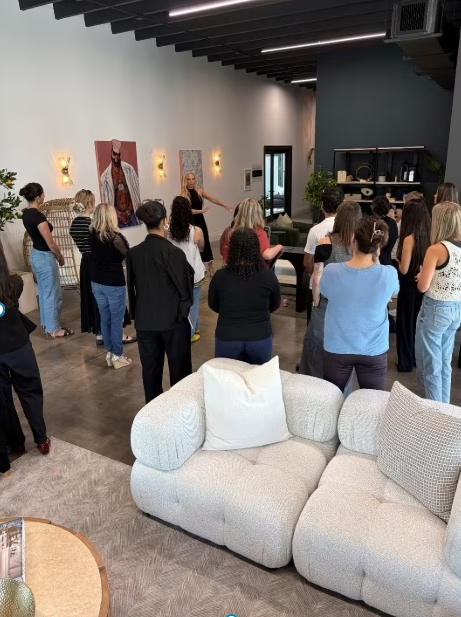
HGTV designer Krista Watterworth Alterman addresses Indian River State College interior design students during a visit to the Mother Ship, a Jupiter event space she designed.
What does it look like when a working professional walks into a room of students and speaks the truth about the field they’re about to enter? Seventeen Indian River State College interior design students recently found out firsthand.
Celebrated interior designer and HGTV alumna Krista Watterworth Alterman hosted the students at the Mother Ship, a private event space in Jupiter. What began as a guest talk quickly became something far more meaningful. Specifically, it turned into an honest, two-way conversation about creativity and leadership. The group also discussed what it genuinely takes to build a career in design.
Meet Krista Watterworth Alterman
Krista is a Florida-based interior designer and television personality known for hosting HGTV shows including Save My Bath and Splurge and Save. She has also appeared on DIY Network’s The Vanilla Ice Project. She owns Krista + Home Design Studio, located in Palm Beach Gardens, and specializes in “casual elegance” and high-end residential design.
More Than a Guest Lecture
Krista didn’t speak at the students — she engaged with them. In addition, she took time to understand each person’s vision for their future. She offered tailored guidance rather than a one-size-fits-all speech. Her candor about the evolution of her own career, the values that shape her firm, and the challenges she’s navigated gave students a window into design life that no textbook can replicate.
“Any time our students can have the opportunity to meet with a noted designer, we are grateful,” said Tara Gray, Indian River State College interior design program director. “Krista shared her insights and experiences and what it takes to be successful in this challenging and competitive field.
The visit also included a guided tour of a space she designed for Holly Meyer Lucas, owner of Meyer Lucas Real Estate and Hype Boss Agency in Jupiter. As she walked students through each room, Krista demonstrated how thoughtful design tells a story. She showed how it connects brand identity, spatial flow, and human experience into something cohesive and intentional.
What Students Took Away
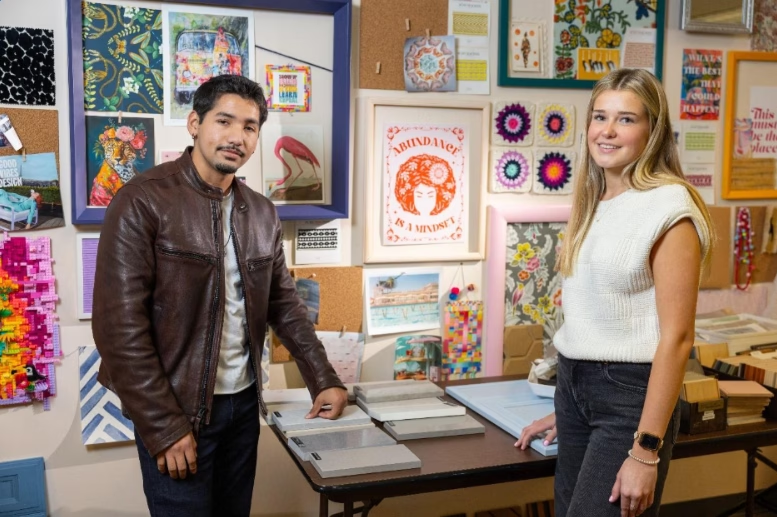
Interior Design Technology students showcase their work in the program’s design studio at Indian River State College.
How to combine creativity with strategy and vision with execution
The role of leadership and empathy in running a design firm
How design, at its best, becomes an extension of identity
The lasting value of mentorship and authentic connection
About The River’s Interior Design Program
Indian River State College’s Interior Design Technology program prepares students for a dynamic, people-centered profession. It does so by blending technical expertise with creative vision and real-world application.
Degree & Certificate Options:
Associate in Science (A.S.) in Interior Design Technology
Technical Certificate in Home Staging — earnable simultaneously with the A.S. degree
Pathway to a Bachelor’s Degree at Indian River State College or another Florida public university
What You’ll Study: AutoCAD, building codes, lighting design, textiles, commercial and residential design — plus hands-on studio experience that builds a portfolio reflecting your unique voice.
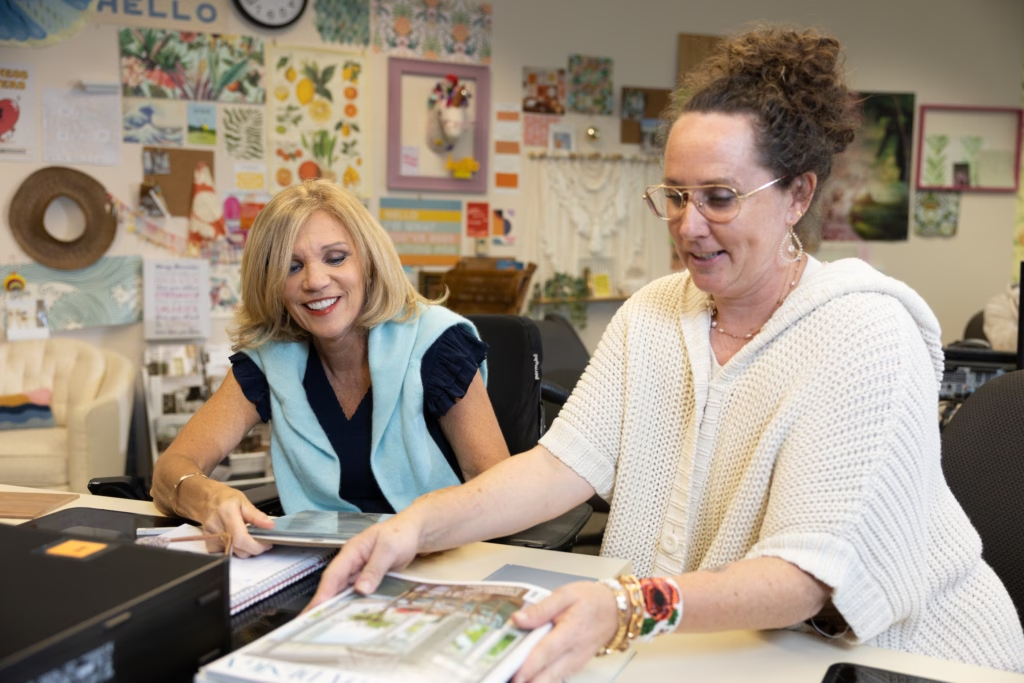
Instructor and student review design materials in the Interior Design Technology program at Indian River State College.
Interior Design Career Outlook & Salaries in Florida
Graduates enter a field with strong earning potential and diverse career paths, including:
Independent design consultant
Architectural and design firms
Hospitality and hotel design
Real estate staging
Healthcare facility design
Retail and commercial spaces
Florida Interior Designer Salaries:
Average: approximately $65,000/year
Experienced professionals and top earners: $100,000+/year
Education That Goes Beyond the Classroom
For The River’s Interior Design program, moments like Krista’s visit are woven into the fabric of the curriculum. This is because at Indian River State College, education extends well beyond the classroom. Technical skills matter, but so does understanding the human side of the profession. Krista reminded students that the industry they’re entering is shaped by people who care deeply. She told them that they, too, have a place in it.
Start Your Interior Design Career at The River
Ready to transform spaces and lives? Visit irsc.edu to explore the Interior Design program and take the first step toward a creative, rewarding career at one of Florida’s premier public colleges. Request info or apply today!
Smith discusses his lifelong connection to wildlife art and what it means to bring this piece to life.
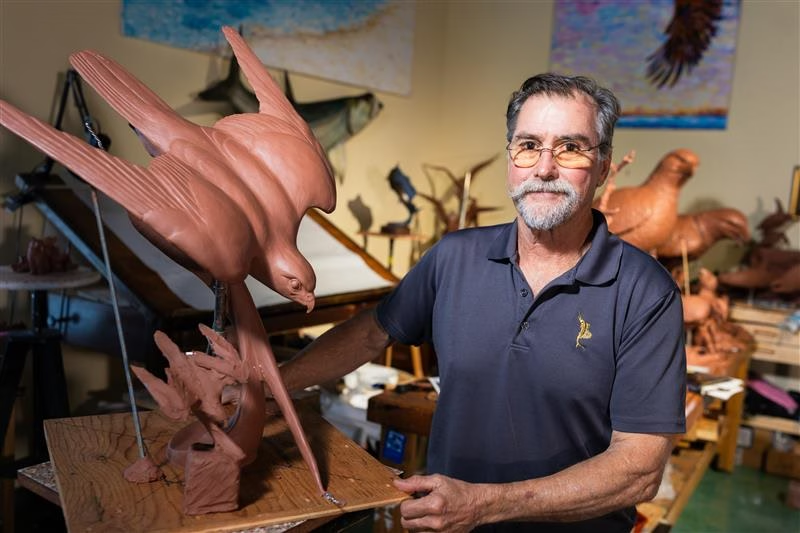
Geoffrey Smith stands next to the clay model of the peregrine falcon he is working on that will eventually be installed as a bronze statue at Indian River State College.
From Wood Carving to Bronze Casting: How Geoffrey Smith Found His Medium
Walk into Geoffrey Smith’s studio on Dixie Highway in Stuart and you understand why he never left. Bronze creatures fill every surface — sailfish, sea turtles, kingfishers, an octopus mid-reach. Outside, a rewilded preserve hums with egrets and spoonbills. In fact, manatees have been known to wander in at high tide.
Smith is one of America’s most celebrated wildlife sculptors. His 18-foot bronze sailfish is the iconic symbol of downtown Stuart. In 2017, his lotus sculpture Rising Above was presented by President Trump to Pope Francis as an official diplomatic gift. It now lives permanently in the Vatican. And he’s currently at work on a new bronze peregrine falcon for Indian River State College (The River). This bird is the College’s mascot.
It started with a grandfather — a retired orthopedic surgeon who carved wood and passed the skill to his grandson. Smith grew up hunting and fishing on the northern California coast. He made duck decoys through high school and college before relocating to Montana, where he discovered bronze casting. The difference from woodcarving struck him immediately.
“I’m going from working with wood, where you’re taking away the whole time,” said Smith. “With the sculpting, you would add wax and then take it away, add, take away. So you couldn’t mess it up, you just keep working it.”
He cast his first piece, sold it, and never looked back. “I thought, holy smokes — I could make this work.”
A Studio Rooted in Florida Wildlife: Manatees, Kingfishers, and a Rewilded Preserve
He arrived in Stuart in 1997 and stumbled into a downtown gallery space when the previous tenant was moving out. “They had the perfect pigeon,” he laughs. He ran it for nearly 30 years.
The drive behind his art, Smith says, comes from “someplace deep and dark.” He describes himself as compelled to tell the story of the wild. He is frustrated that so many people miss the nature right in front of them.
“So many people don’t see the nature around them,” said Smith. “You can’t get to my gallery without passing a kingfisher — they are everywhere. And I know it drives my wife crazy when we’re driving because she doesn’t think I pay attention to the road.”
His studio property reflects that obsession: he’s rewilded the preserve behind it. During Florida’s manatee crisis, the animals found their way in to graze on cordgrass he planted. “We even had the manatees coming up and eating the salt marsh cordgrass when all the manatees were starving. I love it.”
The Stuart Bronze Sailfish: A Treasure Coast Landmark With Global Reach
The Stuart sailfish commission began with a T-shirt fundraiser that wasn’t going to get the job done. Smith worked his connections — hauling sculptures to fishing tournaments, asking for donations — until one patron, Ed Selian, waved him off. “He said, ‘I’ll pay for the whole thing.’”
The piece took a year and a half. It became something nobody predicted.
“That fish is known in the sport fishing world around the world. You can go to Costa Rica, into the marina — I say the Sailfish and they go, Oh, that Geoffrey Smith.”
“I could never have dreamt of the impact that one sculpture would have. I think that speaks to the power of art.”
“Rising Above”: The Florida Lotus Sculpture That Became a Vatican Diplomatic Gift
The lotus piece for the Vatican had similarly humble origins — a family airboat trip on Lake Okeechobee, where Smith first encountered the flower. He eventually made a version for a hospital entrance. When the State Department called, he knew exactly which piece to offer. “I said, that piece — I think what could be more fitting?”
He wasn’t allowed to say anything in advance. The morning the news broke, his phone rang before six. “It was my wife’s ex-husband. He’s like, ‘Geoffrey, turn on the news. You won’t believe it.’”
The River’s Peregrine Falcon Bronze: A Symbol of Student Commitment
The Indian River State College falcon commission is personal. His daughter Carolyn earned her AA through the Clark Advanced Learning Center via the College’s Dual Enrollment program. Her college diploma arrived roughly one week after her high school graduation. Smith attended the graduation ceremony and came away moved.
“I’ve been to lots of graduations — MBAs, college. And I said that graduation was the best. President Moore included everybody. What a great place Indian River State College is.”
The sculpture captures the instant a peregrine falcon commits to its dive — 160 miles an hour, nothing stopping it.
“It’s captured the moment of decision — when that bird has gone from just flying around to seeing its prey, and now it’s committed. For the student, the symbolism: they see their future, they know they’re going to graduate and move forward. Hopefully the students will resonate with that.”
Asked what keeps him rooted here when the world has clearly noticed him, Smith doesn’t hesitate.
“Martin County is like a living sculpture garden for me. Community, friends, family — I built my life here. This is my happy place.”
Most mornings, he is paddleboarding to Jupiter Island before the sun gets too high, watching whatever wildlife is nearby. Then a 10-minute drive to the studio, where the bronze work awaits.
“If I’m not out doing an adventure in the wild, I like to be making something.”
Click here for the RiverTalk interview with wildlife bronze sculptor Geoffrey Smith on IRSC Public Media. Smith discusses his career, his Treasure Coast studio, and what drives him to capture Florida’s wildlife in bronze.
To follow the development of Smith’s falcon statue for Indian River State College, visit the College’s website at irsc.edu.
Six decades ago, Indian River State College made a promise to the Treasure Coast: we will train the nurses this community needs. As the college reflects on the 60th anniversary of Indian River State College’s Associate Degree Nursing program, that promise has never been stronger.
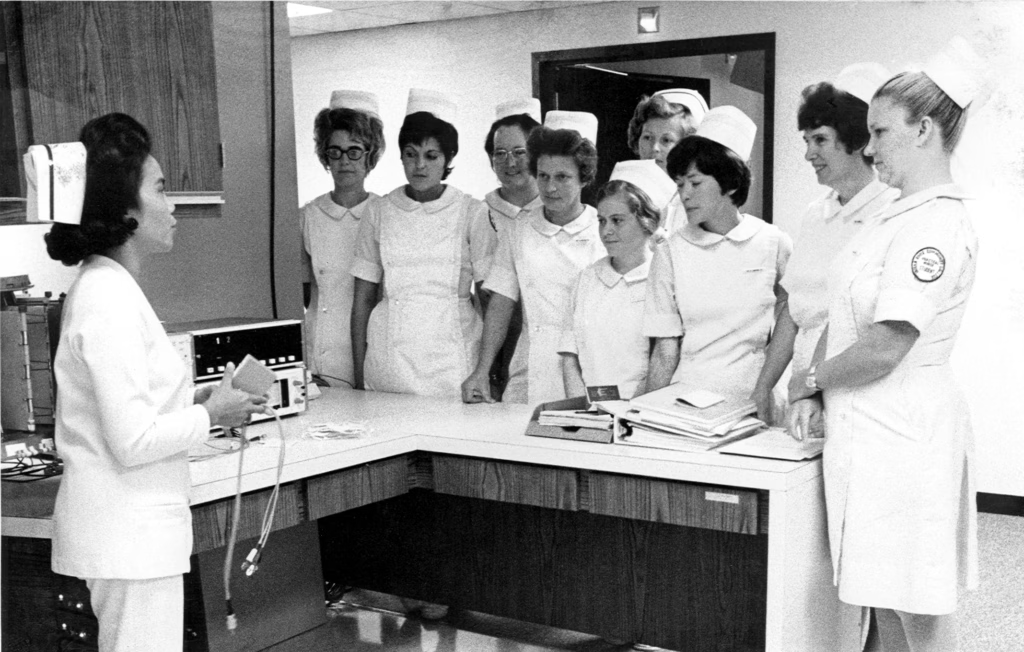
Before simulation labs and digital records, nursing education was built on hands-on instruction and dedication. This 1975 photo captures practical nursing students at Martin Memorial Hospital — part of a long tradition of clinical training that Indian River State College has carried forward for 60 years.
Since 1965, thousands of graduates have walked out of this program and into emergency rooms, ICUs, pediatric wards, and community clinics across our region and beyond. Today, when you walk into Cleveland Clinic or Lawnwood Regional Medical Center, there is a very good chance your nurse is an Indian River State College graduate — and that they chose to stay right here on the Treasure Coast to serve the community that trained them.
A Program Built for This Community
What makes Indian River State College’s nursing program truly distinctive is its deep roots in the region it serves. Executive Dean Dr. Patty Gagliano, who leads the college’s Health Sciences Division, describes a program that has grown alongside the community — one where it is not uncommon for a student to walk in and say their parent sat in the same classroom, trained in the same clinical settings, and built a career right here at home.
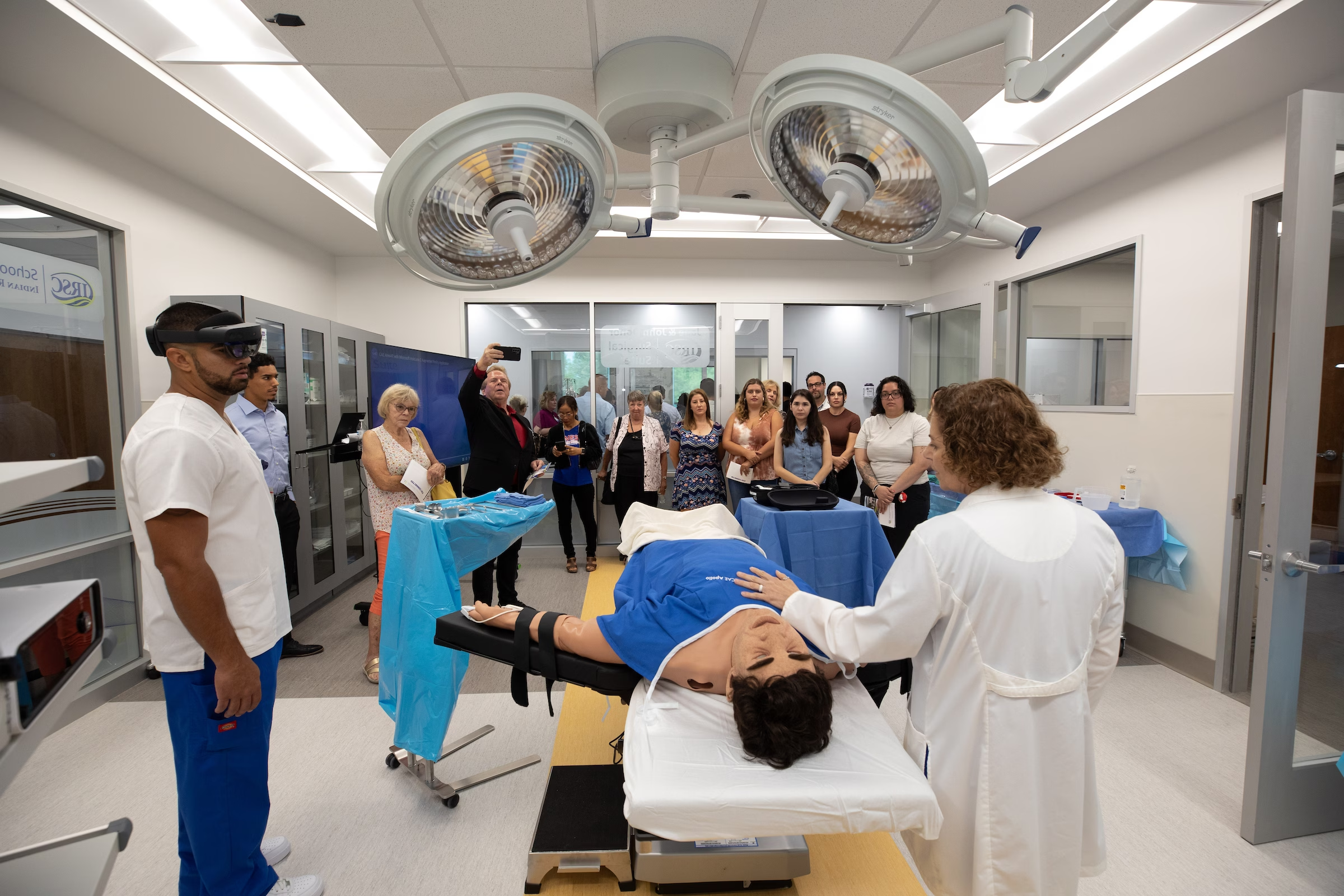
A new chapter begins. Guests got their first look inside Indian River State College’s state-of-the-art School of Nursing simulation center during the 2023 ribbon cutting, where faculty demonstrated the cutting-edge technology preparing the next generation of Treasure Coast nurses.
“It is a full circle life,” Dr. Gagliano shared on a recent episode of River Talk on Indian River State College Public Media. “When you see a parent and a child in our program, graduating and working — that speaks to the quality of what we do and the breadth and depth of who we reach.”
Dr. Patty Gagliano, Executive Dean of Health Sciences at Indian River State College, has dedicated her career to building a nursing program that serves — and reflects — the community it trains.
John Ramfjord, Senior Development Director at the Indian River State College Foundation, has seen that quality firsthand. In his first weeks on the job, he met with healthcare partners across the region and heard the same thing repeatedly: Indian River State College nurses are different.
“The stories I heard about hiring Indian River State College nurses meant that they were getting a quality employee,” Ramfjord said. “They weren’t leaving, they were staying. You hear stories all the time of high turnover in nursing and nursing shortages — but this is one of the few places at full capacity, in part because of the quality of students coming out of Indian River State College.”
That reach extends to Indian River State College’s state-of-the-art simulation center, located at the College’s Pruitt Campus in Port St. Lucie. The simulation center replicates a real nursing unit with 11 fully equipped rooms, the same alarms, tools, and equipment students will encounter in any acute care facility in the area. Students gain hands-on experience from birth to hospice care — all in a controlled, safe environment — before ever setting foot on a hospital floor. Ramfjord, who has toured nursing programs at colleges and universities across the country, is direct in his assessment.
“I have seen several other colleges and universities with nursing programs, and they pale in comparison to the resources that we have here for preparing our nurses,” he said. “It is second to none.”
It is, by any measure, one of the finest nursing training facilities in the state.
Celebrating 60 Years — and Funding the Next 60
To mark this milestone, the Indian River State College Foundation is launching the 60 for 60 Campaign — an initiative inviting the community to give $60 or more in celebration of 60 years of nursing excellence. Every gift will help shape the next generation of nurses, supporting scholarships, student resources, and faculty development.
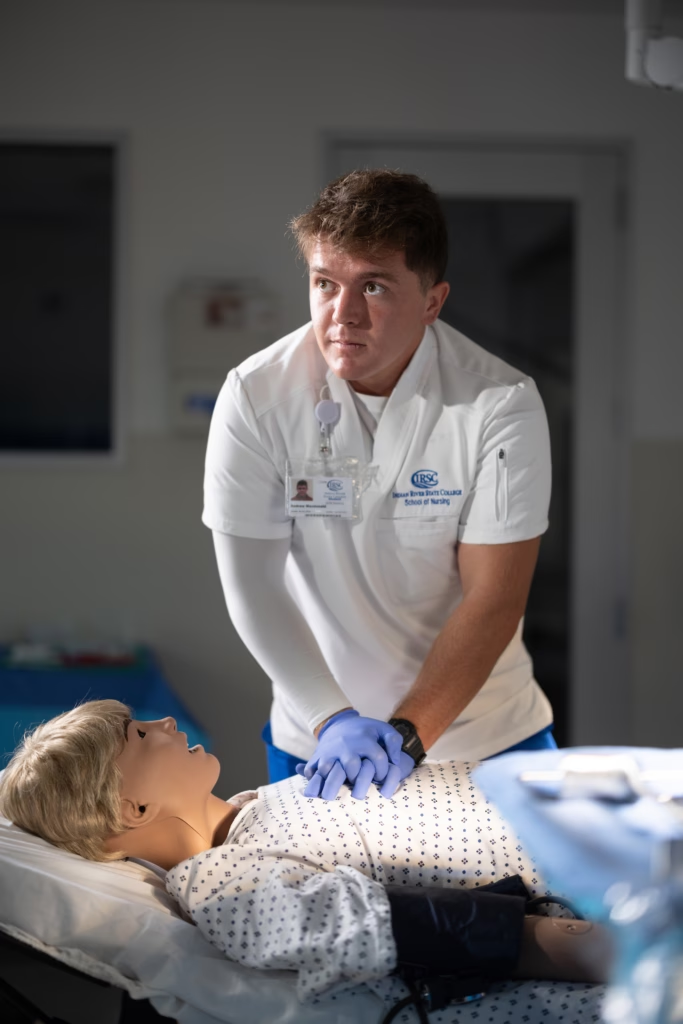
Indian River State College School of Nursing student Andrew MacDonald practices life-saving skills in the college’s simulation lab — the same skills he will carry into hospitals and healthcare facilities across the Treasure Coast.
As Dr. Gagliano put it, “Foundation support opens doors — for students to get into the campus, through scholarship, through the resources they need to be successful.” Faculty, she notes, are “the unsung heroes” of nursing education, providing the one-on-one mentoring and guidance that carries students across the finish line from student to nurse.
Ramfjord sees the campaign as a natural extension of the pride the community already has in this program. “The buy-in is a sense of pride that the community has in the quality of students that Indian River State College Nursing produces — and that’s what has allowed the 60 years to continue,” he said. “I’d like to see that continue, which is why we’re having this campaign.”
To learn more or get involved in the 60 for 60 Campaign before its official launch, contact John Ramfjord at 772-462-7244, or visit giving.irsc.edu.
Is Nursing Your Path? Find Out April 6th
Whether you are working a job you do not love, a recent graduate looking for direction, or a CNA or EMT ready to take the next step — Indian River State College wants to meet you where you are.
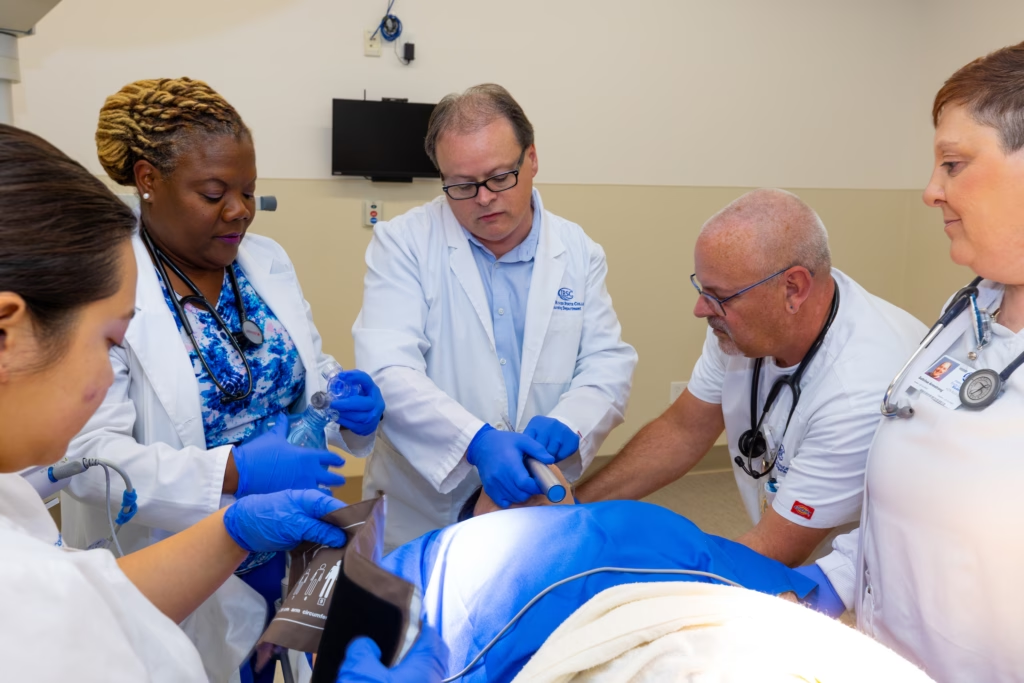
Teamwork is at the heart of nursing. An Indian River State College instructor guides students through a collaborative patient care simulation, mirroring the real-world clinical environments they will enter upon graduation.
“It’s not a physical appearance where they all look the same,” Ramfjord noted of Indian River State College nursing students. “It’s the internal drive, the internal motivations. The willingness to care is what our nursing students look like.”
The college is hosting a Nursing and Health Sciences Open House on Monday, April 6th, from 4:30–6:30 p.m. at the Pruitt Campus. Simulation labs will be open, faculty will be on hand, and advisors, financial aid officers, and library services staff will all be available to answer your questions. It is a chance to see yourself in the role — and to see what 60 years of excellence looks like up close.
River Talk is produced by Indian River State College Public Media and is available at wqcs.org. The full episode featuring Dr. Patty Gagliano and John Ramfjord is available now.
From a small island, a walk-on tryout, and a hard road nobody saw — to two Olympic Games, thirteen national championships, and a dynasty built at the only place that ever felt like home.
There is a moment Sion Brinn returns to often. He is 18-years old, arriving in Fort Pierce from Jamaica with little more than ambition and an unproven talent for the water. No scholarship. No guarantees. A walk-on, by every definition — someone who shows up and asks for a chance.
He got the chance. What he did with it rewrote the record books.
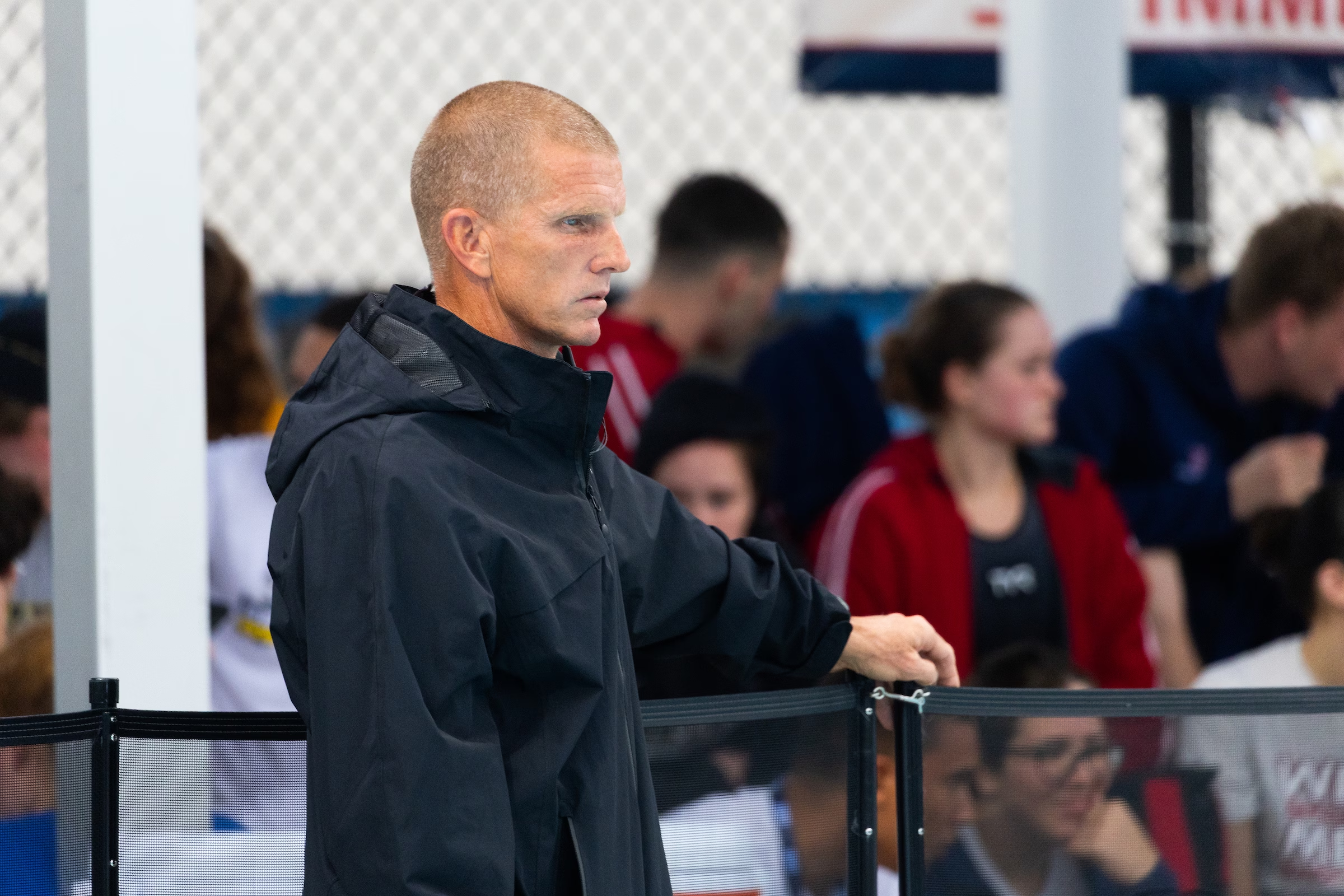
Indian River State College head swimming and diving coach Sion Brinn looks on intently from the pool deck during the NJCAA Swimming and Diving Championships.
Brinn went on to compete at two Olympic Games — representing Jamaica at the 1996 Atlanta Games and Great Britain at the 2000 Sydney Games — becoming one of the rarer figures in sports history: an athlete who stood on the Olympic stage for two different nations. He claimed the ASA National Championship in the 100-meter freestyle in 1998. And then, after the competitive chapter of his life closed, he came back to the place where it all began.
Today, Sion Brinn is the Head Swimming & Diving Coach at Indian River State College. Under his leadership, The River has claimed 13 NJCAA national championships. In March 2026, hosting the national meet at their home pool in Fort Pierce, the men’s program won their 52nd consecutive title. The women’s team captured their 48th national championship — without losing a single event across four days of competition. Brinn was recognized as the 2026 NJCAA Swimming & Diving Men’s Coach of the Year.
It is, by any honest accounting, the greatest sustained dynasty in American collegiate sports. And at the center of it is a man who never forgot what it felt like to be the long shot.
A Kid from Jamaica Who Had Something to Prove
Brinn was born in Jamaica. Swimming was not a given. Resources were not a given. The path to elite athletics — for a kid from an island without the infrastructure that produces Olympic swimmers — required something extra. He found it.
Sion Brinn swims the 100-meter freestyle at the ASA National Championships
“I came from a place where if you wanted something, you had to go get it yourself. Nobody was going to hand it to you. I think that’s shaped everything about how I coach and how I live — the belief that the work is what matters, and that the work is always enough if you commit to it completely.”
Arriving at Indian River State College as a walk-on, Brinn quietly built a competitive career that would eventually take him to two continents and two different Olympic delegations. That journey was not without turbulence. The years between his first competitive strokes and the Olympic podium were marked by the kind of hardship that either breaks an athlete or forges them.
“There were times I wasn’t sure how the next chapter was going to go. Times when the circumstances of life — money, opportunity, belonging — weren’t lining up the way I’d hoped. But I never stopped moving forward. I’d learned very early that the only way out is through.”
He competed for Jamaica in Atlanta in 1996, then navigated the complex and rarely traveled path to representing Great Britain in Sydney in 2000 — one of the few athletes in Olympic history to compete for two nations. In 1998, he claimed the ASA National title in the 100-meter freestyle. It was, by any measure, a remarkable athletic biography.
But the chapter Brinn seems most connected to — the one that means the most — is the one still being written in Fort Pierce.
Coming Home
After his swimming career ended, Brinn moved into coaching. He served as head coach at Wright State University in Dayton, Ohio — learning the craft, building his philosophy, finding out what kind of coach he wanted to be. Then, in 2013, Indian River State College called.
“When the opportunity came to come back here, it wasn’t a difficult decision. This place made me. It gave me a chance when I was just a kid who showed up with nothing but belief. That’s not something you forget. That’s not something you walk away from when you have the chance to give it back.”
Head coach Sion Brinn rallies the Indian River State College swimming and diving teams during prelims at the 2026 NJCAA Swimming and Diving Championships.
The homecoming was sentimental, yes. But it was also something more. Brinn arrived at a program already steeped in tradition — a program that had been winning national championships since before many of his current athletes were born. The challenge was not to build from scratch, but to sustain and extend something almost impossible to maintain.
He has done exactly that.
“Every year, I tell this team: the streak is not a gift. It’s not something we inherited and get to keep by showing up. We’ve earned it, year after year, because of a culture that doesn’t allow for shortcuts. The moment we start protecting a legacy instead of building one, we’ve already lost.”
2026: A Championship at Home
In March 2026, Indian River State College hosted the NJCAA Swimming & Diving Championships at the Anne Wilder Swimming and Diving Complex at Indian River State College in Fort Pierce. The timing felt almost scripted. In front of their own community — friends, family, the Fort Pierce faithful who had watched this program define excellence for decades — The River delivered one of the most dominant performances in the meet’s history.
Indian River State College swimmers launch off the blocks during finals competition at the 2026 NJCAA Swimming and Diving Championships, hosted at Indian River State College.
The men’s team captured their 52nd consecutive NJCAA national title. The women’s program won their 48th national championship without dropping a single event across the entire four-day competition. Sophomore Marcus Johnson of Coral Springs, Florida, set new NJCAA records in both the men’s 50-yard and 100-yard breaststroke. The men’s 400 medley relay team broke the national record by more than two seconds. And tied the 200-medley relay record that was set last year.
2026 NJCAA National Champions: Indian River State College Men’s Swimming & Diving Team
“We talk every year about not taking anything for granted, and I think that mindset is what keeps this program going. This group worked incredibly hard all year long. To do it at home, in front of our community, in front of friends and family — this one is very special.”
The atmosphere at the Anne Wilder Swimming and Diving Complex that weekend carried a weight that went beyond scorelines and record splits. For Brinn, it connected to something deeply personal.
2026 NJCAA Champions: Indian River State College Women’s Swimming & Diving Team
“When I was swimming here, we were going for the 18th and 19th championships. To have now won 52 is something I’ll never quite be able to put into words. This is what we work for every single day.”
Indian River State College President Dr. Timothy E. Moore, who has watched the program’s culture up close, put it plainly: “This is an extraordinary culture of excellence that this coaching staff and these student-athletes live every single day.”
Indian River State College head coach Sion Brinn receives the NJCAA Men’s Swimming & Diving Coach of the Year award on stage during the 2026 NJCAA Swimming and Diving Championships awards ceremony.
Champions in the Classroom
The excellence Brinn has helped build at Indian River State College does not stop at the pool’s edge. The athletic department has placed a deliberate, sustained emphasis on academic achievement alongside athletic performance — and the results speak for themselves.
This past fall, Indian River State College athletics achieved record-breaking academic performance, with a 3.4 overall GPA across all athletic programs. Three teams finished with a GPA of 3.51 or higher, including the women’s swimming and diving team — a reflection of a program that takes the student side of student-athlete seriously.
“We recruit competitors, but we’re developing people. These athletes are going to leave here and build careers, start families, and lead communities. What happens in the classroom shapes all of that. We hold ourselves to the same standard academically that we hold ourselves to in the water—excellence is the expectation, full stop.”
That philosophy has taken root across the program. The women’s team, which swept the national championships without dropping a single event in 2026, also stood among the top academic performers in the entire athletic department. For Brinn, that dual standard is not a side note to the dynasty — it is part of its foundation.
Members of The Indian River State College Swimming and Diving Team receive the Academic All-Stars Skull Award for their high academic achievement in 2026.
What Actually Drives Him
Ask Brinn what motivates him — what gets him on deck before dawn, what fuels the recruiting conversations and the hard conversations and the thousand decisions a season demands — and he comes back to the same place every time: the walk-on who got a chance.
“Every student-athlete who comes through that door, I see myself in them. I know what it means to need someone to believe in you. That’s the job. That’s the real job. The championships are the result. The work is in the people.”
That philosophy — meet athletes where they are, demand everything they have, believe in them before they believe in themselves — has produced Olympians, national champions, and, by all accounts, people who carry their time at The River with them long after they’ve left the pool.
“Swimming teaches you things that have nothing to do with swimming. Discipline. Accountability. How to fail and get back in the water. I want every athlete who comes through this program to leave with those things – to leave here knowing what they’re capable of. The trophies and recognition are great. That’s what lasts.”
The numbers are staggering. The streak is historic. But the thing Sion Brinn seems most proud of — the thing that makes him lean forward when he talks about this program — is simpler than all of it.
“I came here as a kid with a drive and a dream. And this place gave me a life. If I can do that for even a handful of the young people who come through here, then I’ve done my job. That’s the whole thing, right there.
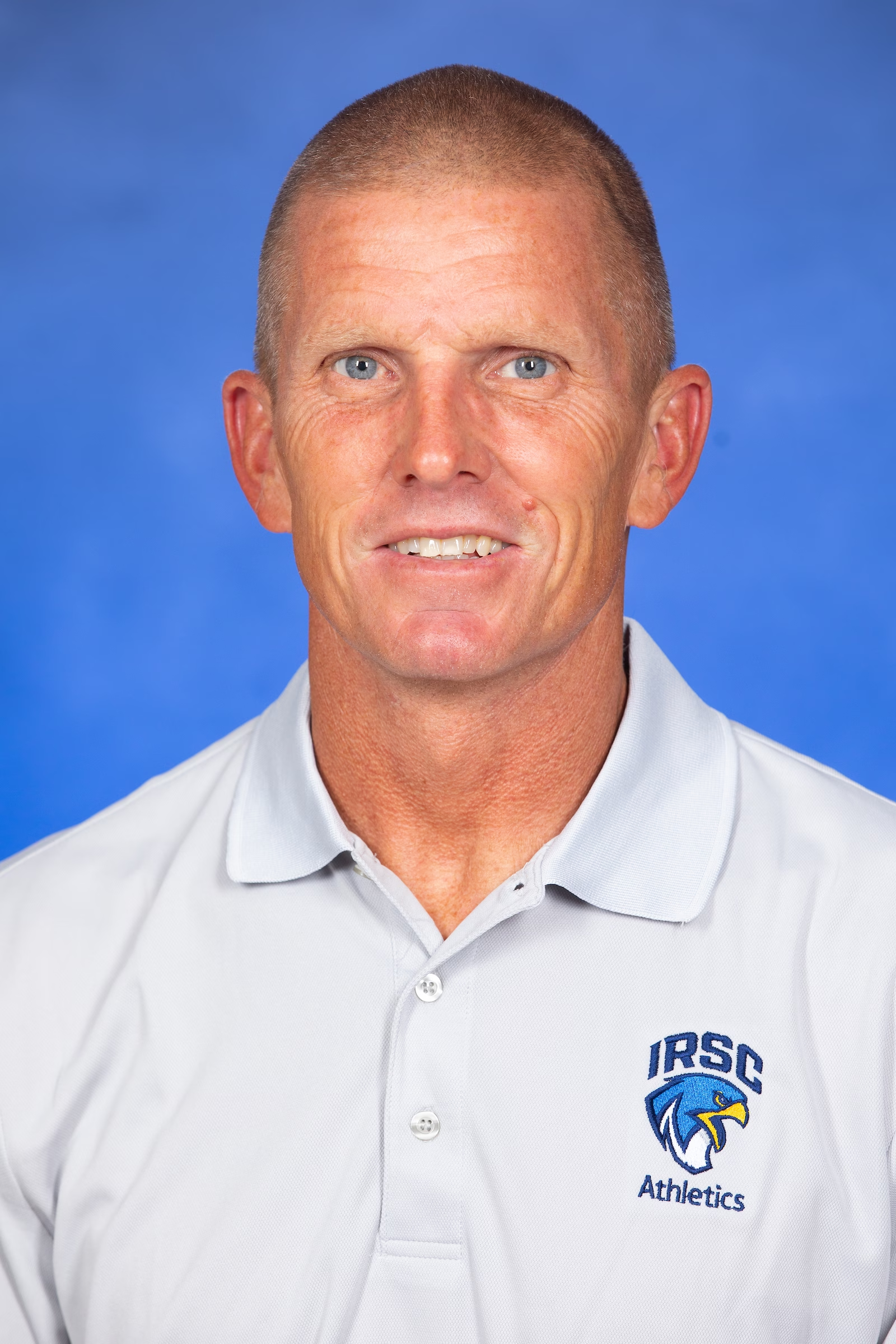
Indian River State College Swimming & Diving Head Coach Sion Brinn
Sion Brinn: By the Numbers
2 Olympic Games represented (1996 Atlanta for Jamaica; 2000 Sydney for Great Britain)
13 NJCAA National Championships as Head Coach at Indian River State College
52 Consecutive men’s NJCAA national titles at Indian River State College — the longest active streak in collegiate sports
48 Women’s NJCAA national championships at Indian River State College
About Indian River State College: Indian River State College serves Florida’s Martin, St. Lucie, Indian River, and Okeechobee counties, offering high-quality, affordable education to over 24,000 students annually through traditional and online courses. The College provides more than 130 programs leading to bachelor’s degrees, associate degrees, and technical certificates. Visitirsc.edu.
Starting or growing a business can feel overwhelming. But what if you had a trusted guide with decades of real-world experience ready to help you navigate the challenges? That’s exactly what the Florida Small Business Development Center (SBDC) at Indian River State College (The River) offers to entrepreneurs and business owners across the Treasure Coast.
Regional Director Tom Kindred recently sat down with Kathleen Walter on IRSC Public Media’s RiverTalk to share insights about this invaluable resource. Here are the top 10 things every business owner should know about the SBDC at The River.
1. It’s Not Just for Startups
While the SBDC helps aspiring entrepreneurs launch new ventures, a significant portion of their work focuses on helping established businesses scale and grow. Whether you’ve been in business for five months or 20 years, the SBDC can help you break through plateaus and reach the next level.
2. The Services Are Completely Free and Confidential
That’s right—free. The SBDC is a federally funded program through the Small Business Administration, which means you get access to high-quality business consulting, training programs, and specialized services at no cost. All consultations are also completely confidential.
3. Real-World Experience Sets Them Apart
Tom Kindred brings more than 20 years of experience running his own retail and restaurant businesses. “My greatest education came from the mistakes and failures,” he explains. “My goal is to let folks know how to avoid some of those mistakes that I made in my small business journey.” This isn’t theoretical advice—it’s wisdom earned in the trenches.
Small Business Incubator at the Small Business Development Center at Indian River State College provides one-on-one consulting to entrepreneurs and business owners looking to start, grow, and scale their operations on the Treasure Coast.
4. They Help You Access Serious Capital
In 2025 alone, the SBDC helped clients secure over $21 million in traditional bank loans and an astounding $84 million in government contracts. While they don’t provide loans directly, they help you put together bank packages, build business plans, and connect with every lending institution on the Treasure Coast. The key? Your business needs to be profitable and cash-flow positive.
5. Government Contracting Is More Accessible Than You Think
Through the Florida Apex Accelerator program, the SBDC helps small businesses tap into government contracts at the federal, state, and local levels. Specialist Scotty Wilson guides clients through the entire process—from acquiring a SAMS number to getting minority-owned, woman-owned, or veteran-owned certifications. They even provide a tool called BidMatch that populates daily with contracts matching your business profile.
Tom Kindred, Regional Director, Small Business Development Center at Indian River State College
6. Business Plans Are Living Documents, Not Shelf Decorations
The SBDC uses an intuitive tool called LivePlan to help clients build comprehensive business plans. “This should be a document that we’re using every day to make sure we’re on track,” Kindred emphasizes. The business plan houses your research, addresses tough questions about growth, identifies key performance indicators, and serves as your roadmap for scaling.
7. They Offer High-End Training Programs
The SBDC provides specialized training beyond one-on-one consulting, including:
Profit Mastery: A 16-hour deep dive into understanding and managing your financials
QuickBooks Training: Supporting the gold standard in small business bookkeeping
Digital Media Boot Camp: Preparing businesses to leverage digital marketing and social media
Team Building Training: Helping you manage and develop your staff
Smart Start Orientation: A 2.5-hour overview for aspiring entrepreneurs
8. They Have Powerful Industry Research Tools
Scaling a business requires data. The SBDC provides access to high-end industry databases like BizMiner, ReferenceUSA, and VerticalIQ. These tools help you understand industry trends, financial ratios, and competitive benchmarks—critical information for making informed growth decisions.
9. International Trade Isn’t Just for Big Corporations
Through the Export Marketing Plan (EMP) program, small manufacturers can explore international markets. The SBDC partners with Select Florida and U.S. Commercial Services to create comprehensive export marketing plans (valued at around $20,000) that identify global markets for your products and connect you to trade missions.
10. They’re Staying Ahead of the Curve
The SBDC recently received grant funding from Verizon specifically focused on artificial intelligence training. Social media specialist Phil Gauldies is developing courses on AI for 2026, ensuring that Treasure Coast businesses stay competitive in an rapidly evolving digital landscape.
The Numbers Speak for Themselves
In 2025, the SBDC at Indian River State College:
Worked with approximately 800 clients
Provided nearly 5,000 hours of consulting
Helped 45-46 entrepreneurs start new businesses
Secured $84 million in government contracts for clients
Facilitated $21 million in traditional capital access
Getting Started Is Simple
Ready to leverage the SBDC’s expertise? Just pick up the phone and call 772-336-6285. Ask for Xiomara (Xio) Rosales to schedule your initial consultation. You can also email them at FSBDC@IRSC.edu.
Whether you’re just starting out, looking to scale an existing business, exploring government contracting, or preparing for international trade, the SBDC at Indian River State College has the experience, tools, and connections to help you succeed.
As Tom Kindred puts it: “I can tell you it is worth the engagement to come meet with the SBDC.”
Don’t let your business journey feel like swimming in a vast ocean without a guide. The SBDC is here, ready to help you navigate those waters and reach your destination.
For more success stories from Treasure Coast entrepreneurs, check out Tom Kindred’s podcast, Small Biz Florida, which shines a light on local business achievements.
Vietnam was hard-time! And just like serving a prison sentence, you couldn’t see your future until the day you were released through the gate back into the arms of your loved ones. The ecstasy of that moment was experienced when the wheels of our “Freedom Bird” lifted off the runway to begin the 18-hour flight home from Vietnam. The combustible atmosphere and pent-up euphoria permeating the cabin suddenly burst into thunderous applause and deafening cheers as the newest group of returning Vietnam veterans celebrated their survival. We were the lucky ones! We were on our way home! We had our future back!
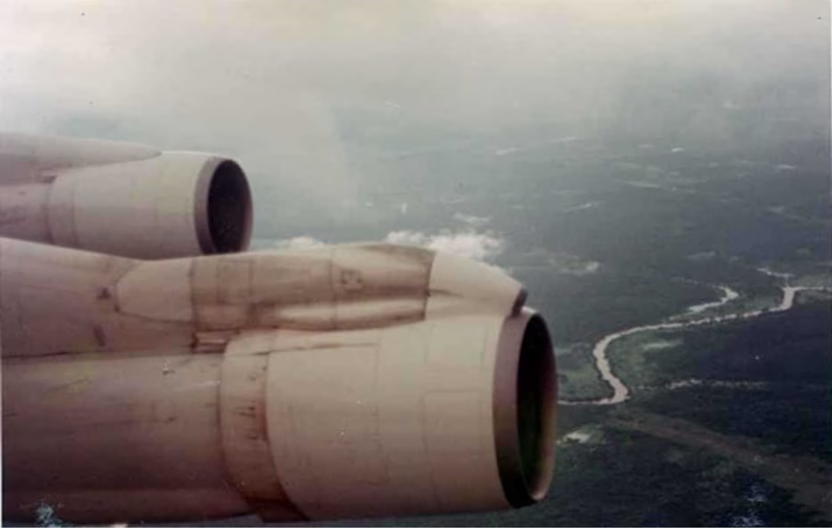
The view from the “Freedom Bird” – wheels up from Vietnam, September 1967. For Sgt. Harvey Arnold and countless other veterans, this moment marked the end of their tour and the beginning of an uncertain journey home.
But what kind of a future does a 19-year-old high-school dropout have to look forward to? If you’re over the age of 40, I’m betting you know the answer to that question.
My father met me at the Orlando International Airport for the final leg of the trip home to Vero Beach. Somewhere just north of Yeehaw Junction on a desolate section of the turnpike, I abruptly announced, “Dad, I want to make something out of my life!” As if he’d been waiting to hear those words for an eternity, my father emphatically retorted, “There’s only one way, you’ve got to go to college!”
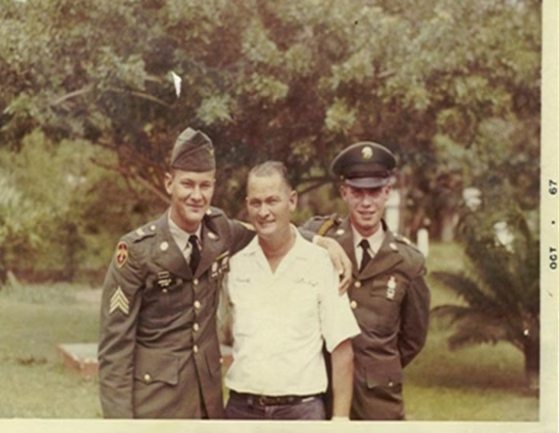
Sgt. Harvey Arnold (left) home on leave in September 1967, shortly after returning from Vietnam. The young sergeant who survived combat would soon face a different kind of challenge – believing he could succeed in college.
Like a combat veteran experiencing a PTSD episode, my mind flashed back to January 24, 1965, in my high-school principal’s office, where his words of condemnation loudly replayed in my mind: “Harvey Arnold, if you don’t change your direction in life, you’re headed straight for the state penitentiary!” So in a panicked tone of disbelief, I fired back, asking my father if he had forgotten that I had failed the 6th grade?! Quit high school in the 10th grade?! Missed two full years of English?! And oh, by the way, I had never taken Algebra?!
There in the front seat of the car with my father was the first time I heard the name, Indian River Junior College (IRJC). “And, it’s right here in your backyard!” Now I hadn’t forgotten my pledge to God in the 93rd Evacuation Hospital, but college?! When you’ve experienced nothing but failure in school, just the thought of attending “college” can be as scary and intimidating as receiving your orders for Vietnam. I know it certainly was for me!
Unable to sway me, our conversation gradually transitioned to more comfortable subjects for the rest of the drive home. But a few nights later, my father asked me to accompany him on a visit to his boss’s house, Dr. Eugene Lyon. Dr. Lyon was the City Manager for Vero Beach and my Dad’s boss, but unbeknownst to me, he was also a history professor for the College.
Standing there in his living room that evening, I listened to how the College’s open-door policy was designed for students – just like me – who weren’t college-ready. For all the aforementioned reasons – failed the 6th grade, missed two years of English, never taken Algebra – I gave Dr. Lyon every single reason and sound argument I could think of as to why I couldn’t be successful. But through all of my vocalized fears, self-doubts, and defiant arguments, he remained steadfast in his conviction that IRJC’s open-door policy was a comprehensive commitment to accept students who weren’t college-ready, help them overcome their academic deficiencies, build a strong educational foundation, and ultimately prepare them to succeed at the university level.
As compelling and reassuring as Dr. Lyon’s responses were to my numerous self-doubts and concerns, I still couldn’t pull the trigger on leaving a promising career with the Army to attend college. Unlike high school, I had been very successful and achieved the rank of sergeant in just under three years. But on the drive home, my father said the magic words to tilt the decision-making scale in favor of college when he said, “You know, if you go to college and graduate, you can become an officer.” Now that was a career path I could identify with!
Seizing the momentum from his persuasive victory, unbeknownst to me my father made an appointment with IRJC’s Academic Dean, Dr. Charles Sample, for the following week. Although I had quit high school in the 11th grade, I had earned my GED while stationed with D Battery, 4th Missile, in Schwabach, Germany. However, Dr. Sample explained that although I had earned my GED, it was insufficient to meet IRJC’s admissions criteria. To be admitted, I’d first have to obtain a High School Equivalency Diploma (HSED) from Florida’s Department of Education (FDOE).
With the above information in hand, my father and I prepared to depart Dr. Sample’s office. As we stood up to leave, he asked if we could spare a few minutes to meet the President. Nodding in affirmation, he escorted us across the hall to President Maxwell King’s office where Dr. King greeted us at the door. Once again, the comprehensive support that Dr. Lyon pledged was reviewed and reinforced by both President King and Dr. Sample.
The latter required me to submit my GED scores in history, math, English, civics, etc. to see if I qualified for a High School Equivalency Diploma. Upon arrival at my final duty station, I immediately submitted the aforementioned GED scores to FDOE. Within a few weeks, FDOE responded that I had indeed met the minimum score requirements to be awarded an equivalency diploma.
With the comprehensive support I received from IRJC as a student-veteran, I overcame my major academic deficiencies in English and math, built a solid educational foundation, identified my passion for economics, and graduated in 1969 with a full academic scholarship in hand to attend the University of West Florida where I was awarded a bachelor’s and master’s Degree in 1972 and 1974 respectively.
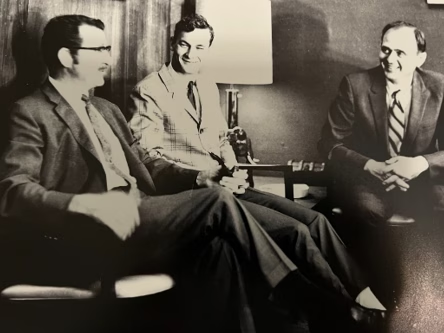
Economics Professor, Dr. Gerald Jenkins (left) and President Herman Heise (right) share the good news with Harvey Arnold that the University of West Florida has awarded him the John Martin Bouland academic scholarship to major in economics. The beginning of the journey – Harvey Arnold’s 1969 graduation announcement from Indian River Junior College, armed with a full academic scholarship to the University of West Florida and a solid educational foundation that would carry him to a Ph.D.
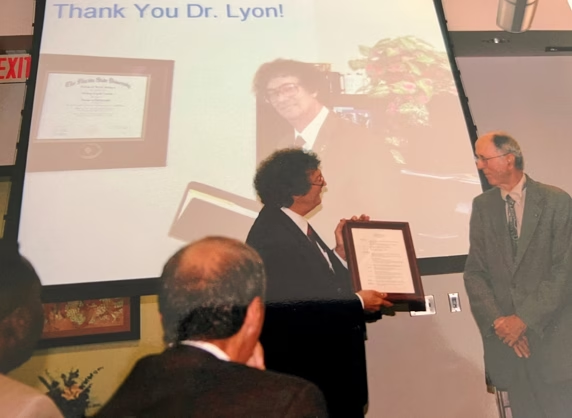
In 2005, I tracked down Dr. Lyon at the Lyric Theater in Stuart and invited him to the IRCC District Board of Trustees Meeting where I recognized him for the impact he had on my life that evening in his home.
In 2005, Dr. Arnold presents a recognition award to Dr. Eugene Lyon at an IRCC District Board of Trustees Meeting, honoring the history professor who convinced a skeptical young veteran that college was possible.
If you took everything Dr. Lyon saidthat nightand condensed it down into one, succinct statement it would read, “If you have the will …. we have the way!”
On a side note, Dr. Lyon is also credited by Mel Fisherfor researching the archives in Spain and pinpointing the location of two sunken Spanish galleons with over $400 million of treasure onboard. His contributions leading to their discovery are explicitly acknowledged by the Mel Fisher Museum in Sebastian, Florida.
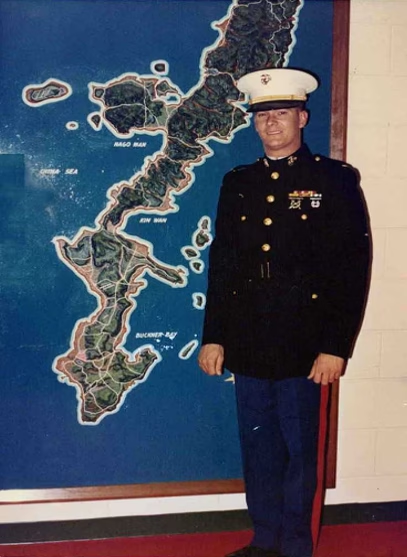
Regarding my father’s sage foresight about becoming an officer if I graduated from college, I was serving as a 1st Lieutenant with the 3rd Marine Division on Okinawa, Japan when IRCC offered me the faculty position in economics in 1976.
1st Lieutenant Harvey Arnold serving with the 3rd Marine Division on Okinawa, Japan in 1976, shortly before accepting the faculty position in economics at Indian River State College – fulfilling his father’s prediction that a college education could lead to becoming an officer.
But, the initial offer was conditional on my reporting in August when the new academic year commenced. While writing then-President, Dr. Herman Heise, directly to express my regrets, I also proffered a Plan B: If the College would agree to cover fall classes with adjunct instructors, I’d extend my tour on Okinawa for 90 days, which would have me arriving stateside for discharge in mid-December and available for the Spring 1977 semester. I subsequently received a second letter from Vice President John Muir confirming their acceptance and, “Welcome aboard! The career goal I set to return as the economics professor while still a student at IRJC, was now a reality.
But the best was yet to come! Nothing I achieved during my 53-year affiliation with the College will ever surpass the feeling of accomplishment I felt that first morning when Dr. Muir introduced me to the Faculty as the new economics professor for the College. My former professors were now my colleagues! Their former student had unknowingly achieved the unique distinction of becoming the first IRJC graduate to be awarded a full-time faculty position with the College …. A dream I would be privileged to live for the next 28 years.
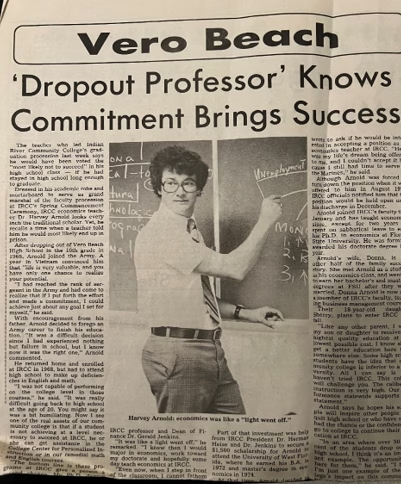
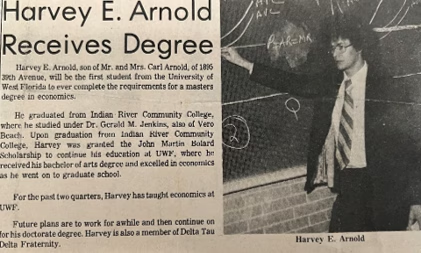
“Dropout Professor Knows Commitment Brings Success” – A newspaper profile of Dr. Harvey Arnold teaching economics at Indian River State College, embodying the college’s promise that determination and institutional support can transform lives.
After receiving tenure in 1980, I was granted back-to-back sabbaticals to pursue my highest academic goal of earning a Ph.D. in economics. That goal was realized in August 1986 when I was awarded my Ph.D. from Florida State University. Therefore, I can personally attest to Dr. Lyon’s unwavering faith in the open-door policy by stating, “I was always challenged at the next level, but I was never unprepared!” I can also state without hesitation or reservation that Indian River State College’s highest priority has always been student success. And, that was decades before being honored with the nation’s top award for student success, the Aspen #1 Award, in 2019. I can also attest without any equivocation that Indian River State College deserved the distinction of being a veteran-friendly institution decades before it officially received that laudable designation.
But despite the comprehensive support I received from the College as a student, faculty member and administrator, they couldn’t help me overcome the lingering scars and suppressed memories from serving in the Vietnam War. As I had journeyed through the university system during the height of the War’s growing unpopularity, I was verbally accosted and subjected to further rejection and scorn as I tried to defend our Country’s purpose and involvement. After several painful incidents, I adopted a self-imposed, psychological defense of don’t ask, don’t tell by keeping my opinions and memories to myself. So, like so many other Vietnam vets, I became a closet Vietnam veteran.
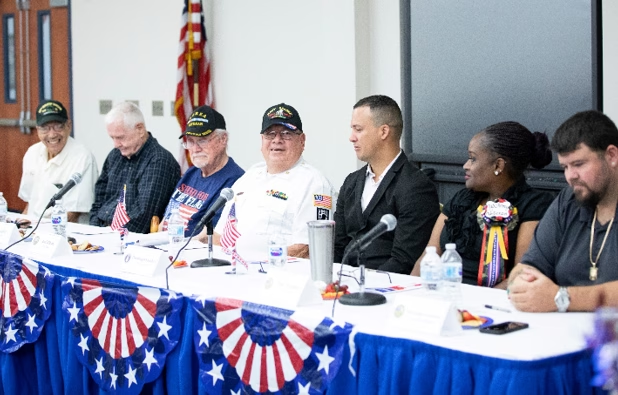
But as the page turned to the 21st Century, and the Vietnam War was replaced by the more patriotic wars of Desert Storm, Desert Shield, Operation Iraqi Freedom, and Afghanistan, the public’s appreciation and respect for veterans returned. Once again, veterans were honored and revered for their sacrifice and welcomed home with the respect and dignity they deserved. Symbolic of the renewed appreciation trend, the College created the Veterans Panel as part of International Week, allowing veterans from different wars to share their experiences and field questions from the public and a student-dominated audience.
The Veterans Panel in session during International Week. Veterans from different eras share their experiences with students and the community – a tradition that helped Dr. Arnold emerge from decades of silence about his Vietnam service and find healing through shared stories.
During the early years of the panel’s existence, I declined numerous invitations and requests to serve as a representative of the Vietnam War. Still too gun-shy to come out of the closet, I’d politely decline and refer them to other Vietnam vets working at the College. But as time passed and attrition took its toll, I was eventually the last one remaining. After receiving several phone calls and face-to-face requests to serve on the panel, I finally acquiesced and reluctantly agreed to serve on a one-time basis.
As a closet Vietnam veteran, I hadn’t spoken openly about the War publicly for decades, so I had a formidable psychological hurdle to overcome before my apprehensive debut. But as I began to share the stories and events with my fellow veterans and an appreciative audience, I felt a decades-long burden being lifted from my soul as the years of repressed experiences and pent-up emotions finally found a healthy outlet. What a catharsis! The experience was so therapeutic! To finally share my Vietnam experiences and military stories without the fear of retribution or rejection truly replicated the same cathartic and psychologically healing experience a psychiatrist would want to achieve for their patient.
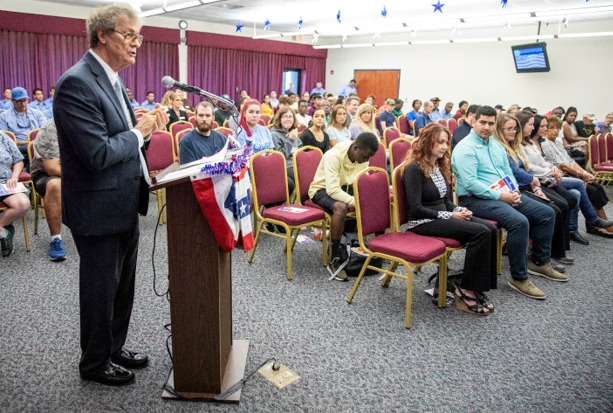
Although my initial intention was to serve on a one-time basis just to appease the organizers, I went on to serve as a representative of the Vietnam War for the next several years. And in 2004 when I was promoted to Provost of the Pruitt Campus, all future panels were hosted at the Schreiber Conference Center where my role as panelist transitioned to that of moderator.
Dr. Harvey Arnold moderates the Veterans Panel at the Schreiber Conference Center, an annual International Week event that became a therapeutic outlet for sharing Vietnam experiences and helped restore his pride in military service after decades as a “closet Vietnam veteran.”
Thanks to the opportunity to serve as a panelist and then moderator of the Veterans Panel, Indian River State College played a pivotal role in restoring my pride in both my military service and my experience in Vietnam. I was no longer a closet Vietnam veteran. The Indian River State College promise has been completed 360 degrees!
However, even with the therapeutic effects of serving on the panel, I learned that certain scars will never fully heal. As part of International Week, we have always had English-as-a-Second-Language students from the Prima Vista Adult Education Center make presentations about their respective countries. On one occasion, the student was from Vietnam. I watched and listened intently as she scrolled through pictures in her PowerPoint presentation, enlightening the students about Vietnam’s demographics, geography, and cuisine. Suddenly, a picture of North Vietnam’s flag appeared on the screen. Like being sucker punched, I was blindsided and unnerved by the unanticipated reminder! Consequently, I immediately left the event and walked around the campus to regain my composure. After that traumatizing experience, I realized Vietnam would always be part of my DNA and flashbacks would never be more than a song, smell, sound, picture, or comment away from being triggered and catapulted into the present.
With my 2021 retirement, the College prepared a generous news release crediting me for helping craft the proposal that secured the $450,000 grant to create the Veterans Center of Excellence, serving as moderator of the Veterans Panel for over 15 years, and being selected by G.I. Jobs Magazine as a 2021 Veteran Champion for Education.
But it’s not the College that owes me! If a monetary value could be assigned to the positive net worth I contributed during my 44-year career with the College, it wouldn’t even begin to pay the interest on the debt of gratitude I will always feel for the way the College supported me as a returning veteran on two separate occasions.
When outcomes in our lives escape the realm of explanation by incorporating all the available facts and circumstances, we often ascribe the outcome to a more omnipotent force – God! That deference to a higher power seems most appropriate for comprehending my life’s journey: In retrospect, it almost seems like God must have placed “The River” in my path just so I could honor my predawn pledge in the 93rd Evacuation Hospital.
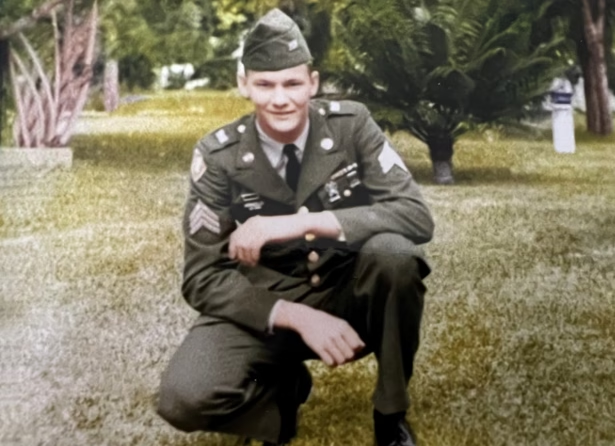
Sergeant Harvey Arnold, September 7, 1967 – safely home from Vietnam. The young NCO who had been so successful in the Army now faced his greatest fear: returning to the classroom where he had known only failure.Dr. Harvey Arnold recognized as a 2021 Veteran Champion of the Year in Higher Education by G.I. Jobs Magazine, capping a 53-year journey with Indian River State College that began with a skeptical conversation in Dr. Eugene Lyon’s living room.
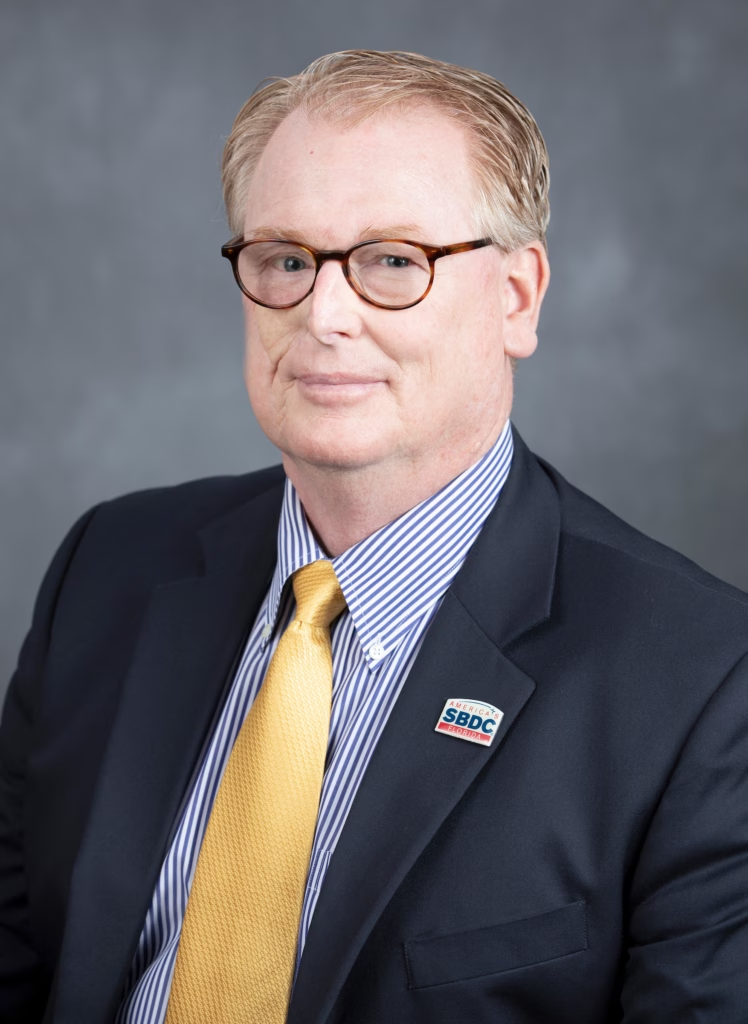
Harvey Arnold was a professor and administrator at Indian River State College for 44 years, including 17 as provost/president of the Ken Pruitt Campus in Port St. Lucie.
By Dr. Timothy E. Moore, Indian River State College President
When I took office as a college president, I made a promise—not just to our institution, but to every veteran who has worn the uniform of our nation’s armed forces. That promise was simple: we would never treat our veterans as an afterthought.
As we approach Veterans Day, I’m reminded of my own journey through higher education as a veteran. Too often, veterans’ services were tucked away in forgotten corners of campus, under-resourced and undervalued. The message was clear: institutions wanted our tuition dollars but weren’t prepared to provide the support we had earned through our service.
This cannot be our legacy.
Today, our college serves more than 400 student veterans and military family members this fall semester alone—more than 1,300 throughout the year. But numbers tell only part of the story. What matters most is how we serve them.
Our designation as both a Florida Collegiate Purple Star Campus and a Gold Status Military Friendly® School represents more than recognition—it’s an exclamation point affirming we’re doing it right. Yet I view these honors as waypoints, not destinations, on our journey to become the institution our veterans deserve.
The transition from military service to civilian life is profound. Our veterans leave an environment of structure, purpose, and camaraderie to navigate a world that often doesn’t understand what they’ve experienced. Many carry visible and invisible wounds from their service. They need more than just academic instruction—they need community, understanding, and support from people who recognize when they’re struggling and know how to help.
This is why we established a Military and Veterans Services department housed at our Veterans Center of Excellence, where veterans can access all available services. It’s not hidden away or difficult to find. It stands as a visible commitment to placing veterans front and center in everything we do. From initial application through graduation, our Military and Veterans Services team provides comprehensive support—admissions assistance, VA benefits certification, academic advising, and emergency financial support. As our Veterans Coordinator and fellow Army veteran puts it: “We take the worrying out of the process because these students have already sacrificed enough.”
The results speak for themselves. More than 250 of our veteran students maintain GPAs of 3.5 or higher. They’re not just attending—they’re excelling and contributing meaningfully to our campus community. Our recent 99.99% compliance rating from the VA reflects our commitment to properly administering the benefits these students have earned.
But academic excellence is only part of our mission. We’re also cultivating something equally important: a culture of respect and gratitude. I watch our students daily—when they discover a classmate has served, they thank them immediately, understanding that person has done something beyond self. This is the atmosphere we must nurture: one where the next generation appreciates the sacrifice of those who came before.
The freedoms we enjoy as Americans are paid for daily by our veteran population. These men and women sacrificed their freedom, time with family, holidays and weekends to serve a higher cause. They were willing to give everything for our nation. The question we must ask ourselves is simple: What are we willing to give them in return?
Education is the great equalizer in America. It’s the pathway to high-paying civilian careers, stability for families, to contributions that strengthen our communities and nation. When we support veterans through higher education, we’re not just keeping a promise—we’re investing in leaders who have already proven their commitment to something greater than themselves.
This Veterans Day, I challenge every higher education institution to examine their commitment to military-connected students. Are your veterans’ services prominent or hidden? Adequately resourced or struggling? Do your faculty and staff understand the unique challenges veterans face? Does your campus culture honor their sacrifices?
At our institution, we’re committed to continuing to grow our veteran population, expanding our support services, and ensuring every veteran who walks through our doors transitions to a successful civilian career. This isn’t charity—it’s our sacred duty.
To our veterans: you served us. Now let us serve you. Your transition from uniform to civilian life should be smooth, respectful, and supported every step of the way. You’ve earned it.
To our fellow educators: veterans aren’t just students seeking degrees—they’re proven leaders with invaluable experience. They will elevate our institutions if we give them the support they deserve.
And to all Americans this Veterans Day: gratitude without action is hollow. Let us honor our veterans not just with words, but with the comprehensive support systems that transform their sacrifice into lifelong success.
That’s the promise we keep at our institution. That’s the standard we must set for the nation.
By Deb Midkiff, Indian River State College Hospitality & Culinary Management Department Chair
As we approach Thanksgiving, I’m excited to share some classic recipes with our River community! I recently appeared on RiverTalk on IRSC Public Media where we talked about preparing the perfect Thanksgiving feast, and so many of you asked for the recipes—so here they are.
Culinary, Restaurant, Hospitality & Tourism Management at The River
At Indian River State College, our Culinary, Restaurant,Hospitality and Tourism Management programs train students in everything from fundaments, modern and classical cooking techniques to hospitality and tourism management. Whether mastering the perfect gravy or front desk, housekeeping, travel and tourism, catering and conference services, our students develop skills that prepare them for careers in restaurants, hotels, tourism, cruiselines, casinos, catering, and culinary arts. The techniques in these recipes are some of the same ones we teach in our kitchens here at The River. I sincerely hope you try and enjoy them!
Thanksgiving Menu
Chef Midkiff’s Thanksgiving menu includes: Roasted Turkey, Giblet Gravy, Stuffing, Cranberry Sauce, Mashed Potatoes, Green Bean Casserole, and Pumpkin Pie
Chef Deb Midkiff leads the Indian River State College Culinary, Tourism, and Hospitality Program
Helpful Turkey Thawing & Cooking Charts
Turkey Weight in lbs.
# of Days to Thaw
Cooking Time (Unstuffed)
Cooking Time (Stuffed)
8
2
2 hr 45 min
3 hrs
12
3
3 hrs
3 hrs 30 min
16
4
4 hrs
4 hrs 15 min
20
5
4 hrs 30 min
4 hrs 45 min
24
6
5 hrs
5 hrs 15 min
Recipes
Pumpkin Pie
Yield: 8 servings (1 pie)
Ingredients:
¾ cup granulated sugar
1 teaspoon ground cinnamon
½ teaspoon salt
½ teaspoon ground ginger
¼ teaspoon ground cloves
2 large eggs
1 can (15 oz.) pumpkin
1 can (12 fl. oz.) evaporated milk
1 unbaked 9-inch deep-dish pie shell
Whipped cream (optional)
Directions:
Mix sugar, cinnamon, salt, ginger and cloves in small bowl.
Beat eggs in large bowl.
Stir in pumpkin and sugar-spice mixture.
Gradually stir in evaporated milk.
Pour into pie shell.
Bake in preheated 425°F oven for 15 minutes.
Reduce temperature to 350°F; bake for 40 to 50 minutes or until knife inserted near center comes out clean.
Cool on wire rack for 2 hours. Serve immediately or refrigerate.
Optional: Top with whipped cream before serving.
Roasted Turkey
Ingredients:
1 whole turkey
½ cup unsalted butter, softened
Salt and ground black pepper to taste
1 ½ quarts turkey or chicken stock
8 cups prepared stuffing
Directions:
Preheat oven to 325°F. Place rack in lowest position.
Remove turkey neck and giblets, rinse turkey, and pat dry with paper towels. Place turkey breast side up on a rack in roasting pan. Season the cavity with salt and pepper. Rub skin with vegetable oil and season with salt and pepper. Position aluminum foil tent over turkey.
Place turkey in oven and pour 2 cups stock into bottom of roasting pan. Baste every 30 minutes with juice. Add stock as drippings evaporate (1-2 cups at a time). Remove foil after 2½ hours. Once turkey reaches 150°F, turn up temperature to 375°F to ensure browning. Roast until meat thermometer reads 165°F in the thigh.
Transfer turkey to serving platter and let stand 20-30 minutes before carving.
Giblet Gravy
Yield: 2-3 cups
Directions:
Remove liver and pour remaining giblet bag contents into large saucepan.
Cover with 2½ cups water and simmer until cooked through, 30-35 minutes.
Remove giblets, let cool, then chop gizzards and heart. Pick meat from neck. Discard bones.
Pour turkey drippings from roasting pan into separate container. Allow grease to separate from juices. Skim fat into another bowl.
Place roasting pan over 2 burners on medium heat.
Add 3-4 tablespoons of fat back into pan and whisk to distribute.
Sprinkle 5-6 tablespoons flour over grease and whisk to combine, loosening bits from bottom.
Cook roux until deep golden brown, 4-5 minutes.
Pour in chicken broth (2-4 cups), whisking constantly.
Cook gravy, whisking gently, until mixture thickens.
Pour in a little turkey drippings.
Continue cooking until thick, adding chopped giblets and black pepper to taste. Use giblet water to thin if needed.
Adjust consistency as necessary.
Stuffing
Yield: 8-12 portions
Ingredients:
¼ cup butter (½ stick)
2 stalks celery, coarsely chopped (about 1 cup)
1 large onion, coarsely chopped (about 1 cup)
2.5 cups Swanson® Chicken Broth
1 package (14 ounces) Pepperidge Farm® Herb Seasoned Stuffing
Directions:
Heat oven to 350°F.
Heat butter in 3-quart saucepan over medium heat. Add celery and onion and cook 5 minutes until tender-crisp, stirring occasionally.
Add broth and heat to a boil. Remove from heat. Add stuffing and mix lightly. Season to taste. Spoon into greased 9x13x2-inch baking dish. Cover.
Bake 30 minutes or until hot.
Tips: For crunchier stuffing, bake uncovered. For Cranberry & Pecan Stuffing, add ½ cup each dried cranberries and chopped pecans. For Sausage & Mushroom Stuffing, add 1 cup sliced mushrooms to vegetables and stir in ½ lb cooked, crumbled pork sausage.
Cranberry Sauce
Yield: 2¼ cups
Ingredients:
1 (12 oz) bag fresh or frozen cranberries
1 cup water
1 cup granulated sugar
Directions:
Wash cranberries and drain well.
In a medium saucepan, combine water and sugar and bring it to boil.
Add cranberries and return to boil.
Reduce heat and boil gently for 10 minutes, stirring occasionally.
Cook until you can hear cranberries popping, 1-2 minutes.
Remove from heat, cool and cover.
Mashed Potatoes
Yield: 8 portions
Ingredients:
2 lb Russet potatoes, peeled
6-8 oz milk, warm
2-4 oz butter, softened
Salt and pepper to taste
Directions:
Place peeled potatoes in tap water with 1 teaspoon salt.
Bring to boil and reduce to simmer. Cook until fork tender.
Drain and dry potatoes on low flame in pan to release excess moisture/steam.
Mash potatoes with masher, fork, or ricer.
Stir in warm milk and soft butter until desired consistency.
Add salt and pepper to taste.
Green Bean Casserole
Yield: 6 servings
Ingredients:
1 can (10½ oz) condensed cream of mushroom soup
¾ cup milk
⅛ teaspoon ground black pepper
1 can (28 oz) any style green beans, drained
1½ cups French’s Original crispy fried onions, divided
Directions:
Preheat oven to 350°F.
Mix soup, milk and pepper in 1½-quart baking dish. Stir in green beans and ⅔ cup fried onions.
Bake 30 minutes or until hot. Stir.
Top with remaining ⅔ cup onions. Bake for 5 minutes until golden brown.
Happy Thanksgiving from all of us at Indian River State College!
Deb Midkiff is a professor in the Culinary, Restaurant and Hospitality & Tourism Management programs at Indian River State College.
Florida welcomed a record-breaking 143 million visitors in 2024 – nearly 3 million more than the previous year. But here’s the challenge facing the Treasure Coast and beyond: 76% of hotels nationwide are experiencing critical staffing shortages, with housekeeping being the most urgent need.
The hospitality industry is booming, but it desperately needs trained professionals. That’s where Indian River State College comes in.
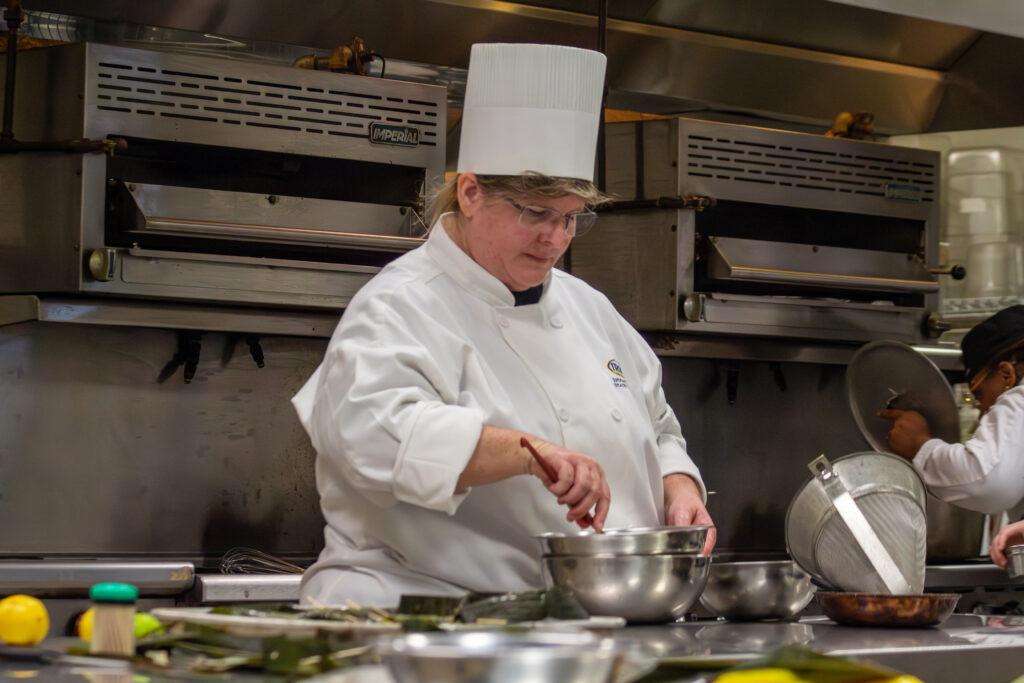
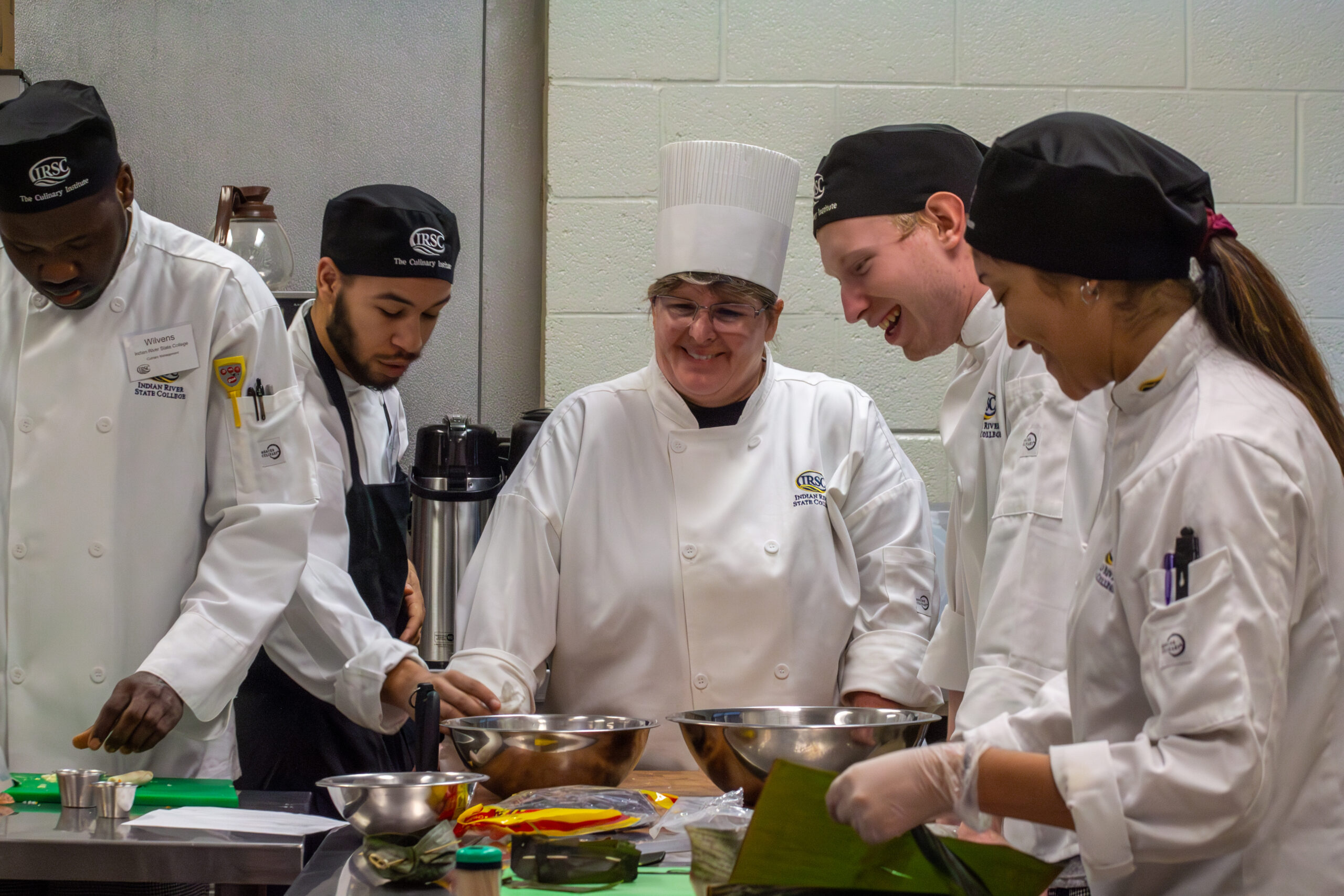
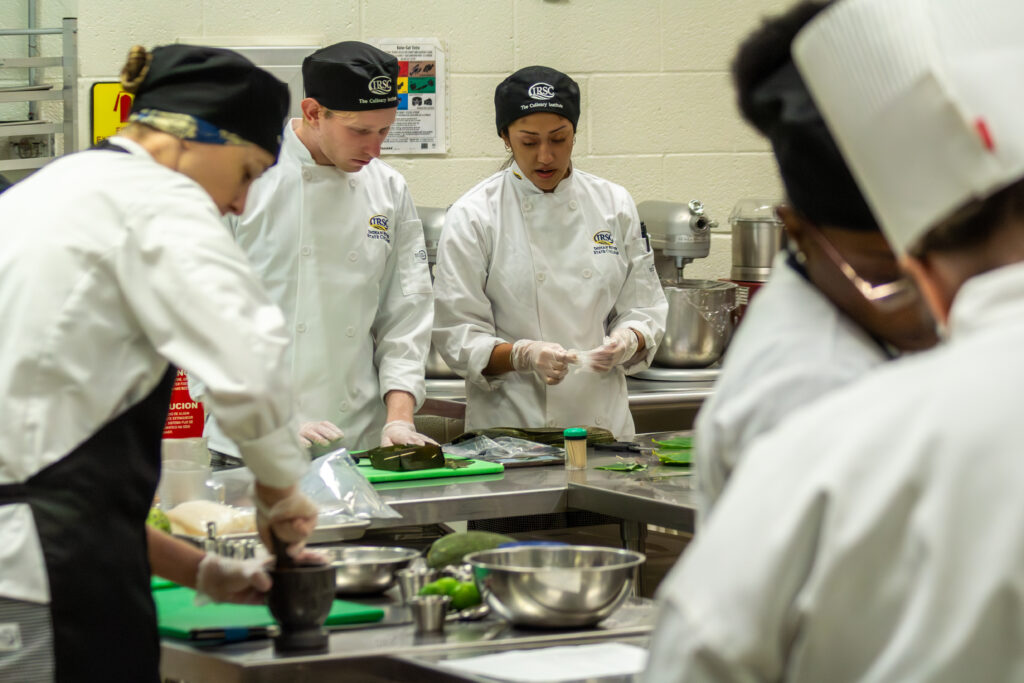
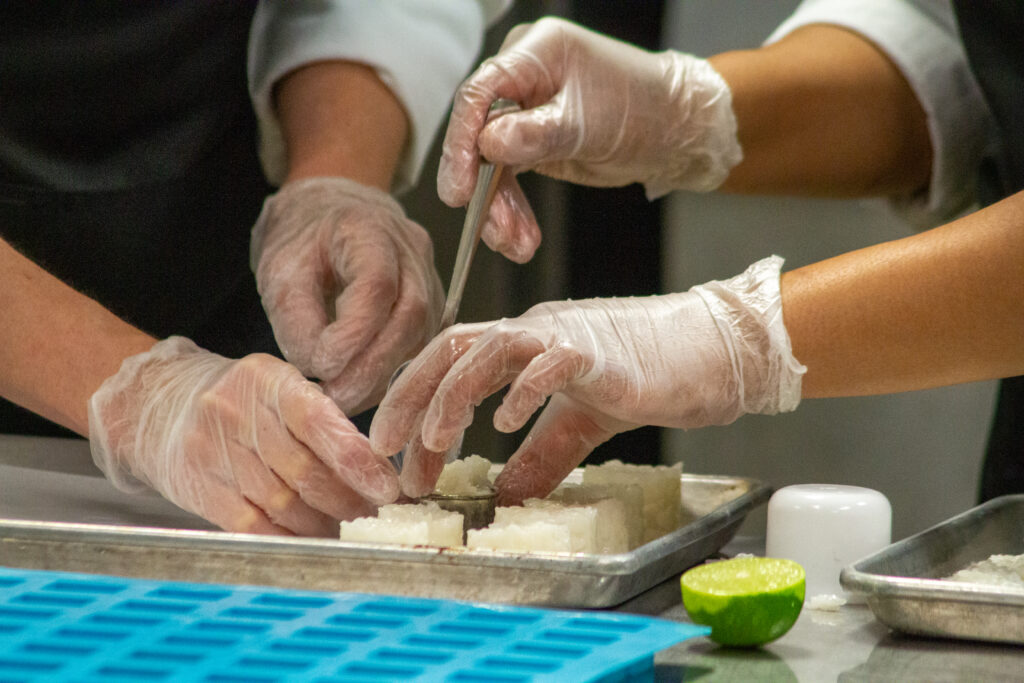
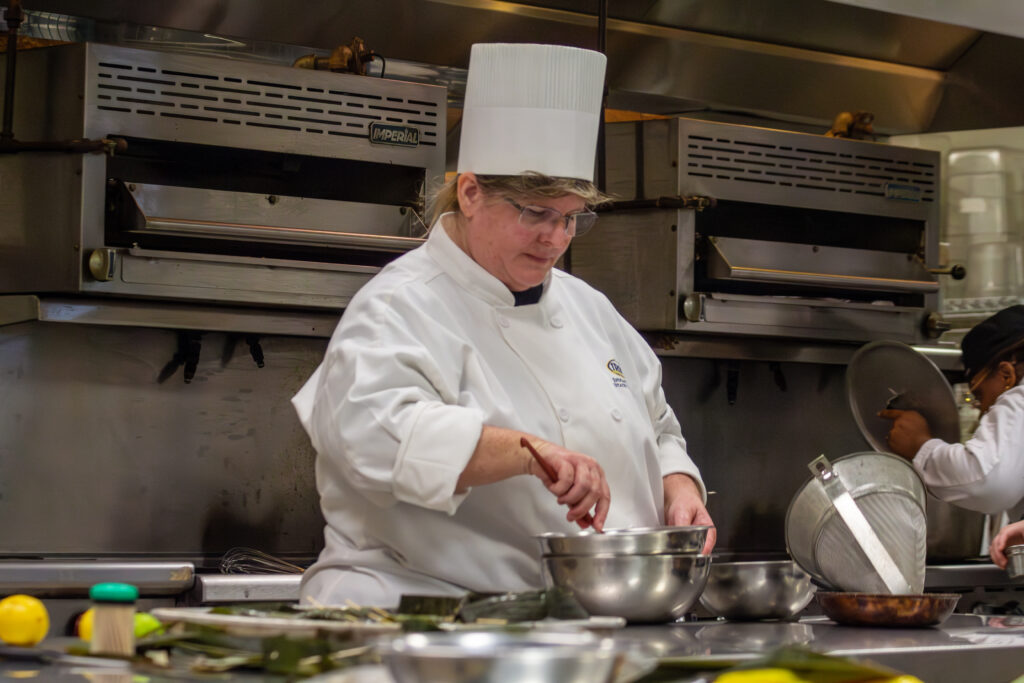
Students in Chef Deborah Midkiff’s International and Regional Cuisine class at Indian River State College prepare a menu on October 25, 2023.
Building the Pipeline
In a recent episode of RiverTalk on IRSC Public Media, host Kathleen Walter sat down with Professor Deborah Midkiff, chair of the Hospitality and Culinary Management Department, along with students Megan DiPietro and Emily Day. Their conversation revealed how The River is addressing the workforce gap right here on the Treasure Coast.
“I think a lot of times people feel that what we do only happens in the classroom with our students, and that certainly is a big piece of it, preparing them for the workforce,” explained Professor Midkiff. “But another piece of that is, how do we connect all the pieces of the pipeline?”
That pipeline starts as early as middle school, exposing young students to hospitality and culinary careers. It continues through partnerships with local high schools, connections with employers seeking great talent, and even pre-apprenticeships in the area.
Students in Chef Deborah Midkiff’s International and Regional Cuisine class at Indian River State College prepare a menu.
More Than Just Cooking and Serving
Many people think hospitality education is limited to learning to cook or serve tables. The reality is far more expansive.
Indian River State College offers a two-year AS in Hospitality and Tourism Management, covering food and beverage, special event management, lodging, and travel and tourism. Some students have gone on to work with the county tourism board. The college also offers a degree in Culinary Management, where students learn not just cooking techniques but the leadership skills to become future sous chefs and executive chefs.
One standout program is the Culinary Apprenticeship – an “Earn While You Learn” initiative. It’s a one-year, tuition-free program where students work 40 paid hours per week in restaurants that cook from scratch, rotating through stations under highly skilled chefs.
Recently, Indian River State College reinvigorated its two-year Restaurant Management degree for students specifically interested in the restaurant side of hospitality, without the lodging component.
Students in The River’s Hospitality and Culinary Management programs gain hands-on experience in state-of-the-art kitchen classrooms, preparing for careers in Florida’s booming tourism industry.
Real Students, Real Success
Megan DiPietro came to Indian River State College after working at and managing a coffee shop. “I didn’t really know what I wanted to do,” she recalled. When she discovered the culinary management program, she realized it combined two things she loved: working with food and management.
Now working at Sweet Desires Bakery, Megan sees how her education translates directly to the workplace. “The program gives you a base, a nice foundation for wherever you go to work,” she said. “Even when I went into working at the bakery, I had very little experience with that. But I was able to hit the ground running.”
Emily Day was drawn to hospitality because of her experience in food and beverage and managing personal estates. “I just kind of saw this degree option and thought that it was a good opportunity to kind of broaden my understanding of hospitality and the options that it offered,” she explained. In addition, Emily completed a summer internship at Chef’s Table Restaurant in Stuart and now has a position with them working with special events and catering.
What Employers Really Want
Indian River State College meets quarterly with an advisory board of industry professionals from restaurants, hotels, and even medical facilities that need hospitality workers. Their consistent message? Soft skills matter most.
“We’ve continued to hear soft skills,” Professor Midkiff noted. “What we’re really narrowing it down to is communication skills, teamwork… time management, prioritization are key things that they’re looking for.”
These skills are woven directly into the curriculum and reinforced through extracurricular events where students take on leadership, planning, and visionary roles.
Professor Deborah Midkiff, chair of the Hospitality and Culinary Management Department, prepares students for leadership roles in Florida’s growing hospitality industry.
A Booming Job Market
The employment picture for hospitality graduates is encouraging. According to Professor Midkiff, average hotel wages have increased 26% since the pandemic. “I’ve seen more of our students over the past three or four years being in positions where they can get promoted into better positions faster,” she said. “Instead of waiting for those opportunities 10 or 15 years, I’m seeing a lot of our really sharp students move into leadership roles within one or two years.”
By 2033, the Bureau of Labor Statistics projects that one in eight new jobs will be tied to hospitality or leisure.
The Technology Factor
Technology is reshaping the industry, but not replacing workers – it’s changing what workers do. From robotic vacuums for housekeeping to AI helping managers with paperwork and predictive analytics, technology is removing some of the physical burden and making professionals more productive.
“AI is not going to take over our jobs, but people that understand how to use it are going to be the ones that get hired for the position,” Professor Midkiff emphasized. The industry will see less blue-collar work and more white-collar, IT-focused, better-paying careers.
Beyond Stereotypes
Hospitality and culinary careers extend far beyond front desk clerks and line cooks. The industry needs IT professionals, finance and accounting experts, scheduling systems specialists, and as virtual reality becomes more prevalent, even more white-collar positions.
Students notice evolving trends too. Emily observes that while some guests want the convenience of mobile check-ins and online payments, others still crave face-to-face personal connections. “There’s still that need for face-to-face personal connection,” she noted.
Megan sees changing tastes in food: “Everyone loves that bright color, the bright flavor… They want things that are simple and just have this nice bright flavor, not so sweet.”
Advice for Future Students
Both students had encouraging words for anyone considering the field.
Emily emphasized the versatility: “There’s just so many options in it. You’re not going to be narrowing yourself into anything too specific… It just gives you a really good baseline education.”
Megan’s advice? “Work a summer job and see if you like it. Then take the leap and apply for a program. Even if you don’t end up using the skills you’ve learned and going into a full-time career in whatever path you choose, it’s still skills that you will take with you for the rest of your life.”
The holiday season is upon us – a time when the hospitality industry shines brightest. Behind every perfectly executed meal and seamlessly managed event are trained professionals like Megan and Emily, who’ve turned their passion into careers at The River.
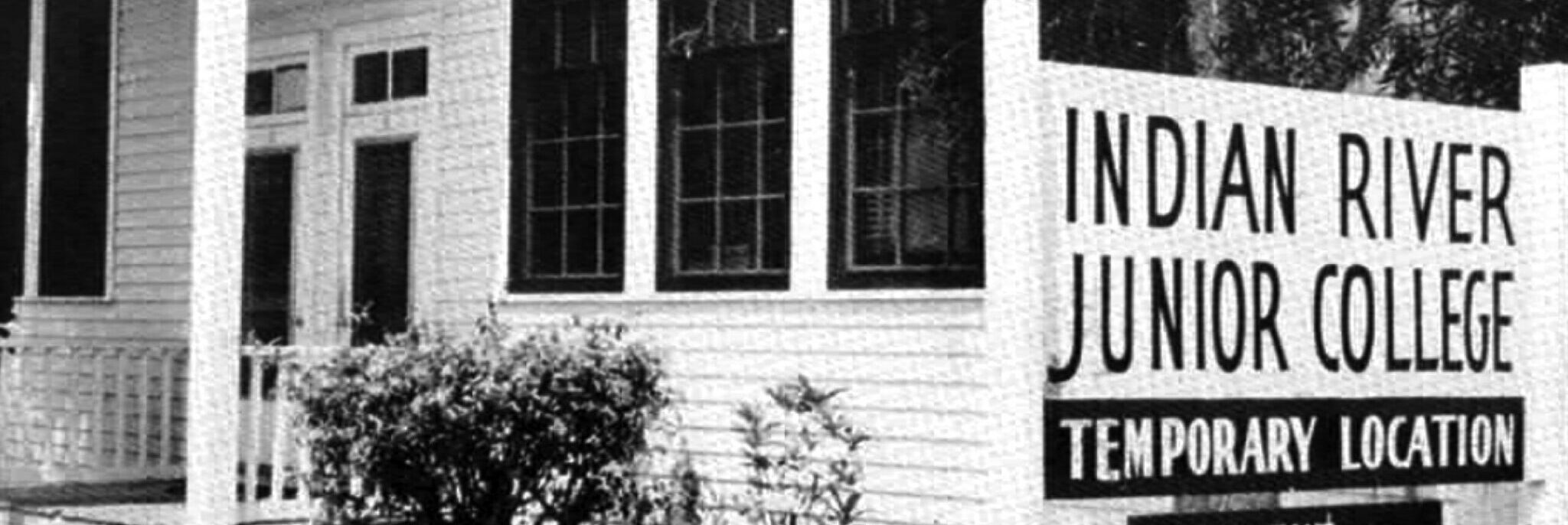
The Florida Legislature officially established Indian River Junior College on January 1, 1960.
By Kathleen Walter
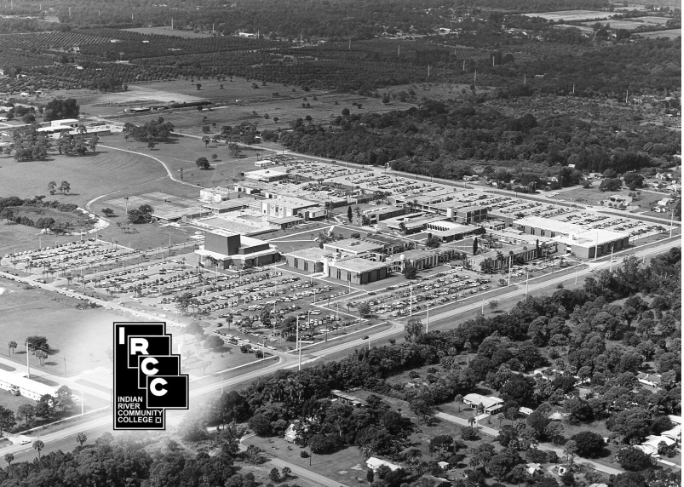
From a single building in 1959 to five campuses serving nearly 24,000 students today, Indian River State College has become far more than an educational institution—it’s a lifeline for the region.
On a recent episode of RiverTalk on IRSC Public Media, two people who embody this remarkable journey shared their perspectives: Dr. Mia Tignor, Associate Vice Provost of Academic Affairs and college historian, and Professor June Wells, who has taught here for an extraordinary 53 years. Their conversation revealed not just the facts of Indian River State College’s evolution, but its soul.
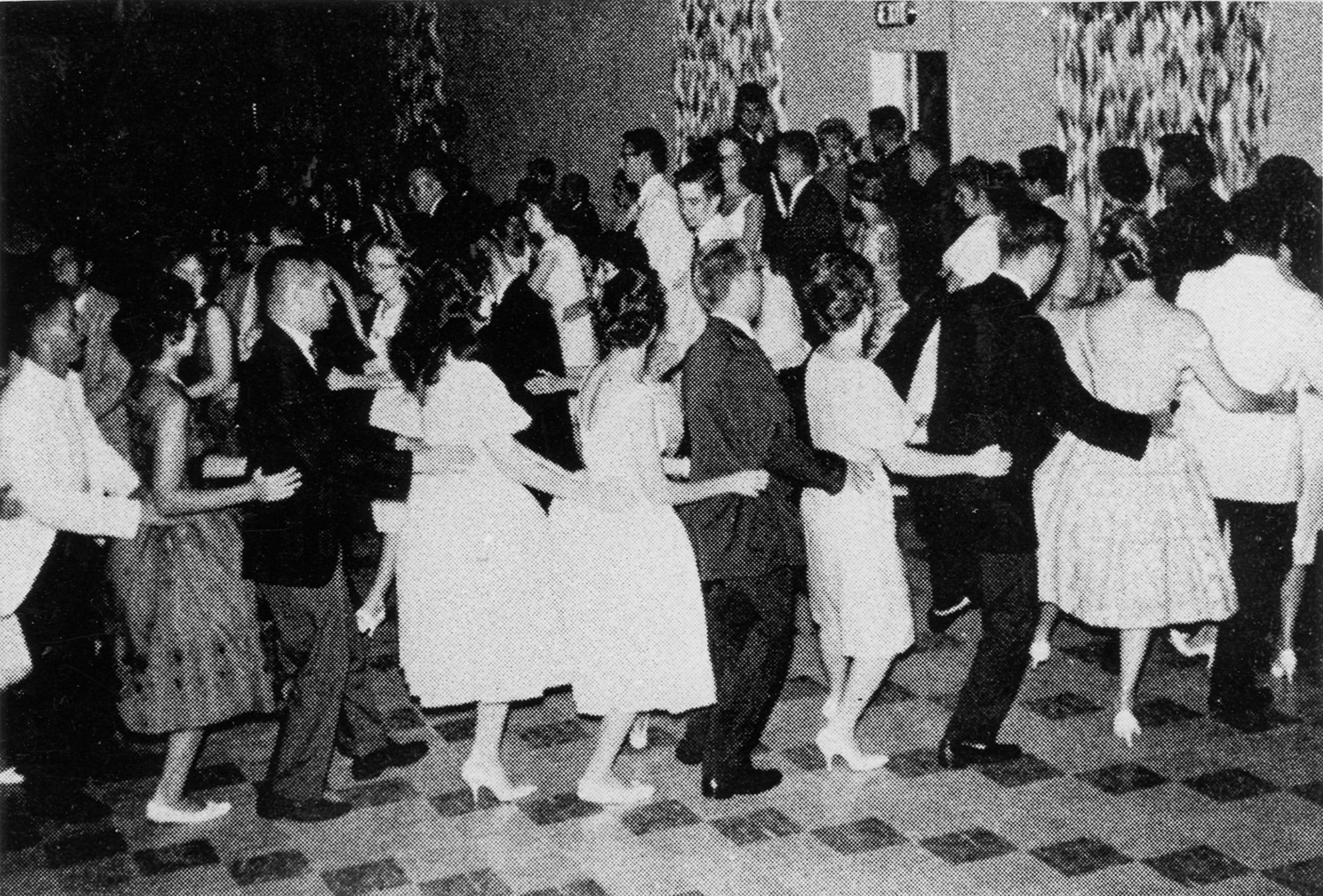
A black and white photo of men in suits and women in dresses doing the conga dance.
From Junior College to State College
The transformation from Indian River Junior College to a state college authorized to grant bachelor’s degrees in 2008 stands as a pivotal moment. As Dr. Tignor explained, this shift allowed Indian River State College to serve students “across all levels of education”—from adult education through bachelor’s programs—making higher education accessible in a region where Indian River State College remains the only public institution serving four counties.
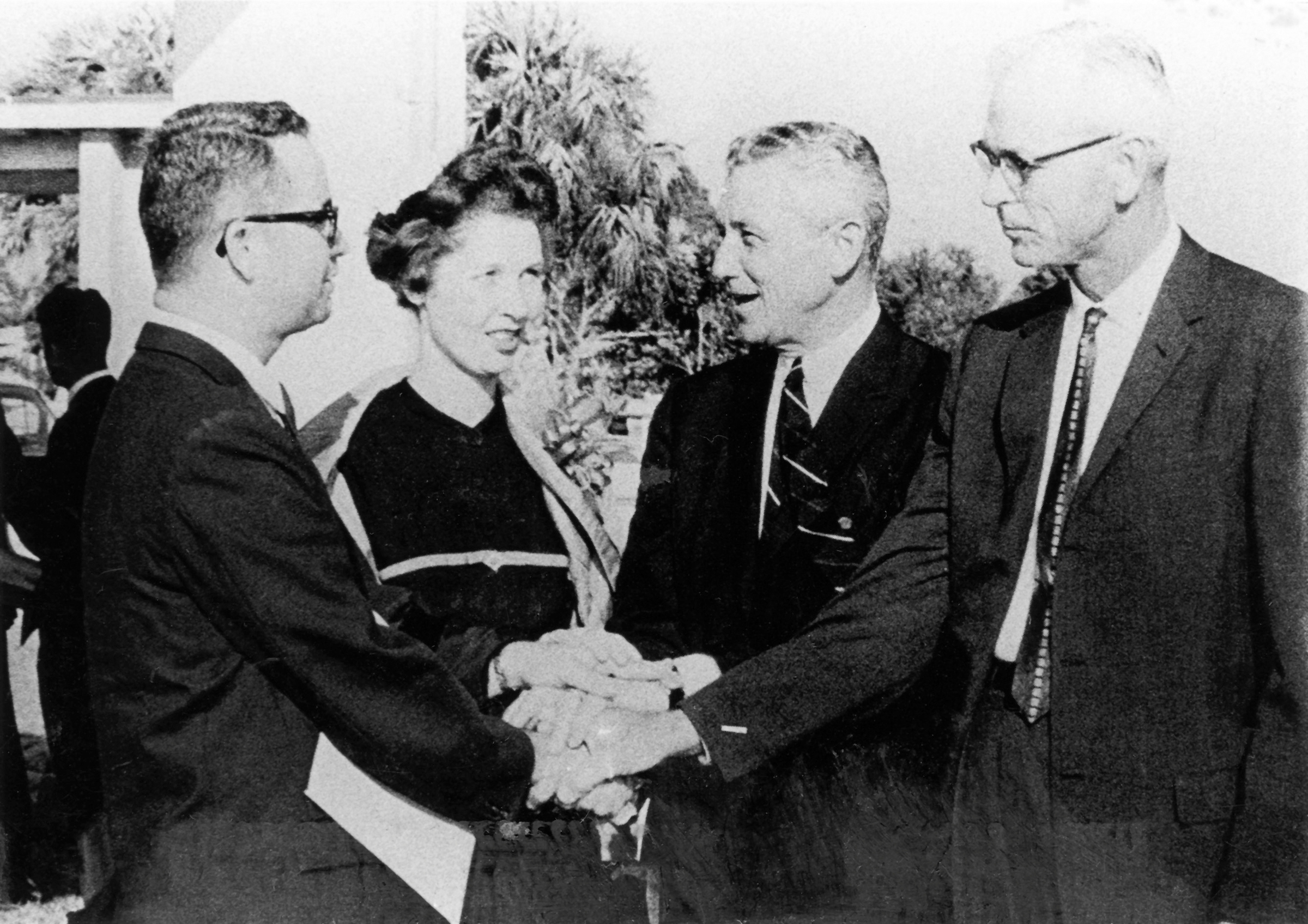
Congratulations to IRJC President Max King and Mrs. King (left) from Governor LeRoy Collins and Senator Harry Kichliter on the establishment of Indian River Junior College.
Professor Wells helped architect this change, literally building the bachelor’s programs in education from the ground up. “It was basically the idea that we were trying to make education available to a bigger kind of population,” she recalled, describing how faculty created courses, wrote syllabi, and adapted content for specialized populations in law enforcement, fire science, and other fields.
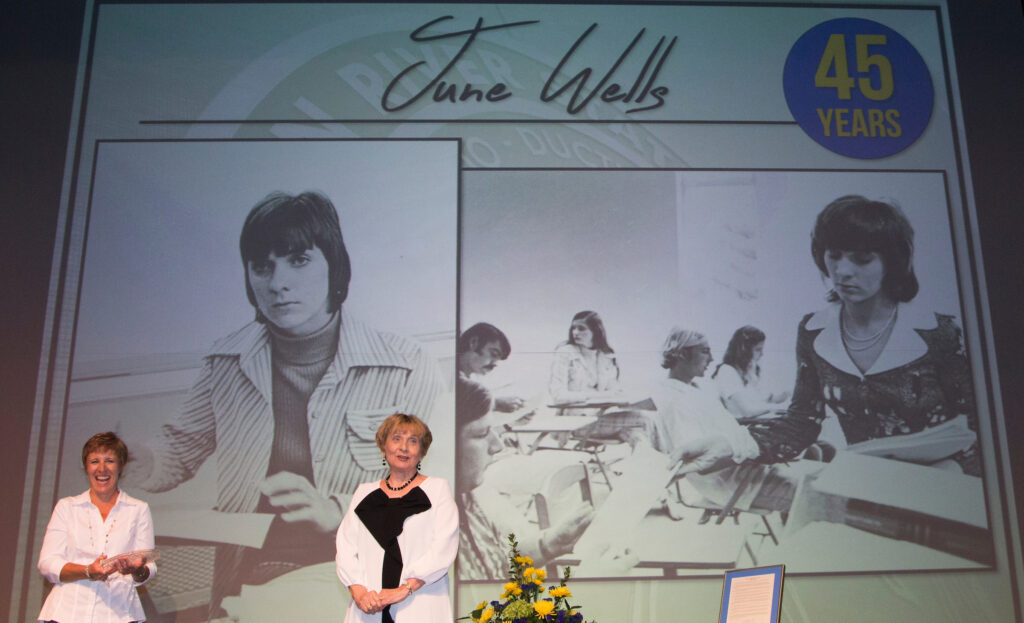
Professor Wells was recognized for 45 years of service to the college in 2018.
The Geography of Opportunity
Spanning Fort Pierce, Vero Beach, Stuart, Okeechobee, and Fort St. Lucie, Indian River State College’s five-campus footprint shapes its identity in profound ways. Each campus serves distinct populations with unique needs, requiring flexibility in how resources are deployed. At the Pruitt campus, for instance, a joint-use library with St. Lucie County offers early literacy programs for an up-and-coming community—services that might look different at the Fort Pierce campus where other resources exist.
A Personal History
When Professor Wells arrived in 1973 as faculty member number 37, she could barely find Fort Pierce on a map. Fresh from the University of South Florida with a master’s degree in rhetoric and public address, she joined a small institution with just four or five buildings. But she quickly understood her mission: showing young people, especially young women, what they could become.
“Dr. Heise said to me, I want you to go out there and show people, especially young ladies, what they can become,” Wells remembered. In an era when college wasn’t assumed for women, she literally walked students from her neighborhood to registration, helping them believe they belonged in higher education.
Integration’s Legacy
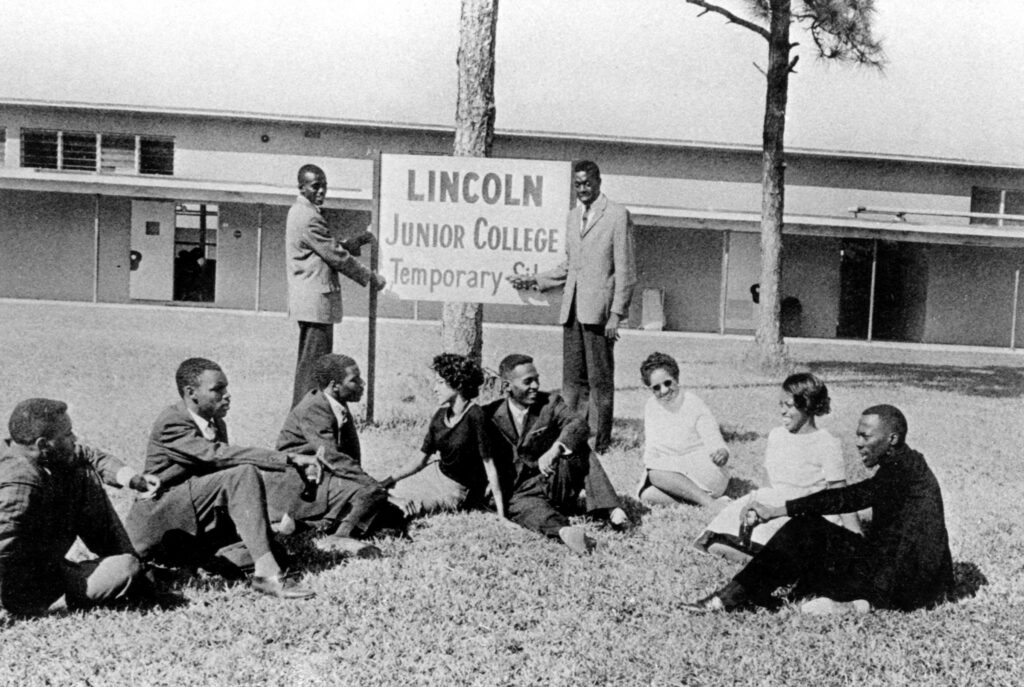
Eight years before Wells arrived, Indian River Junior College merged with Lincoln Junior College as part of integration in 1965. While she inherited this history rather than lived it, she saw its effects—a conscious effort to bring diverse populations together and create a welcoming environment.
Lincoln Junior College was established in 1960.
Digital Evolution
The college’s learning infrastructure has transformed dramatically. Dr. Tignor traced this evolution from the library’s opening in the late 1960s—with its card catalog and physical books—through online catalogs, and now to comprehensive digital resources. Her mother attended library school with card catalogs; Tignor studied an entirely different system 20 years later.
Dr. Tignor attends a college event in 2018.
Today’s students access Adobe Creative Campus tools, Bloomberg Terminals, Wolfram Alpha, and institutional Grammarly subscriptions—professional-grade resources once available only to those already in industry. The 2013 launch of Indian River State College Online expanded flexibility even further, building on earlier innovations like VHS video classrooms that streamed to campuses without resident faculty.
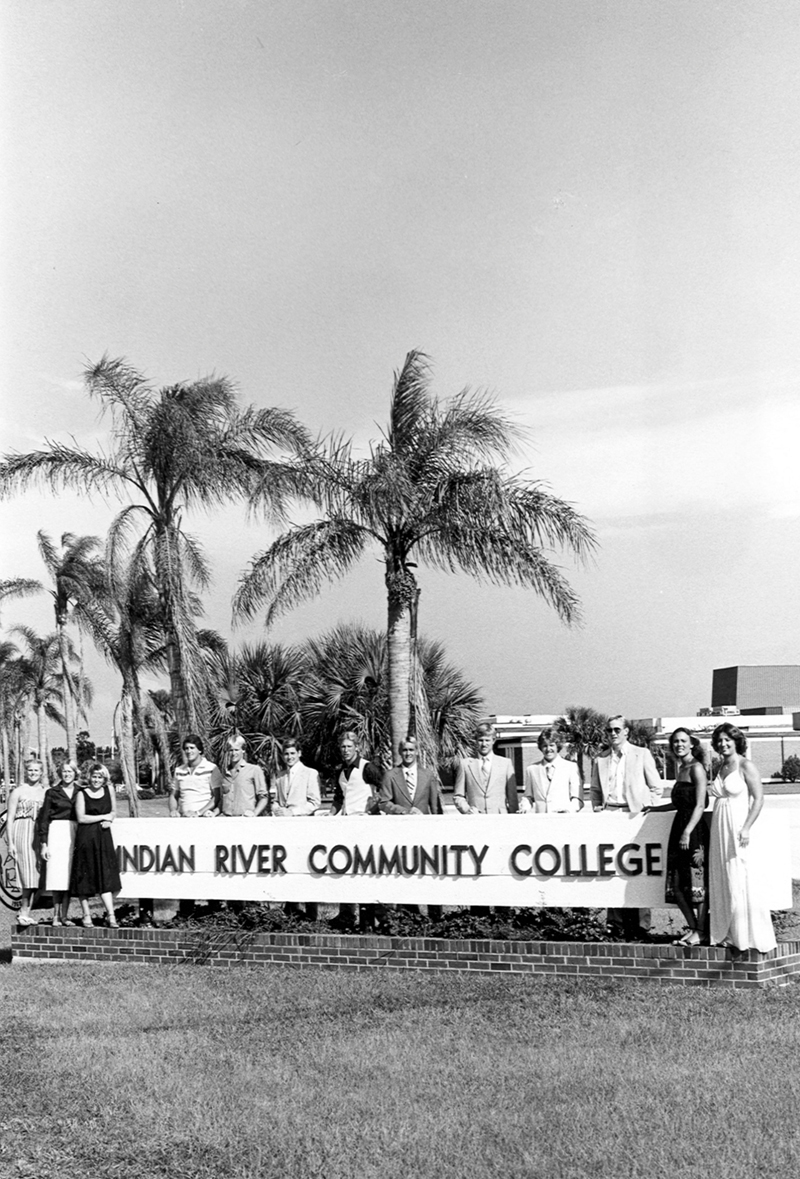
Indian River Community College in 1983
What Endures
Despite all this change, Professor Wells identified something constant: the relationship between faculty and students. Unlike her own college experience, where professors seemed distant, she’s always maintained an atmosphere where students feel comfortable asking questions, seeking help, admitting confusion. “Never be told that’s a stupid question,” she emphasized, understanding that one dismissive response silences the next person.
This culture of accessibility connects directly to The River’s founding purpose. The junior college system emerged after World War II to meet workforce education needs that four-year institutions couldn’t accommodate alone. The recent Promise Program, which helps make college tuition-free for eligible local students, continues this tradition of opening doors for those who might not have thought college was an option.
Bold Moves Forward
Recent years have brought dramatic developments: a $45 million gift from MacKenzie Scott, the Eastman Advanced Workforce Training Complex, expanded nursing facilities that double capacity, and programs in rail industries, ballistics technology, and advanced manufacturing. The Center of Excellence for Veteran Students Success recognizes another population Indian River State College serves. These transformative initiatives occurred under the leadership of Indian River State College President Timothy E. Moore in 2020.
How does the college stay ahead of economic needs while remaining true to its mission? Dr. Tignor described a two-tiered approach: maintaining strong core programs like the Associate in Arts while partnering with industries to offer new certifications and short-term training for students who don’t need traditional degrees.
12,000 Students and Counting
Professor Wells has taught more than 12,000 students—a number she processes by remembering individual speeches rather than faces that have aged forty years. Students return and ask, “Do you remember my speech?” And often she does. Citrus blackfly. She remembers.
What drives someone to show up, in person, after 53 years? For Wells, it’s seeing how populations and needs change. Public speaking still needs teaching, but now she incorporates interview skills, because employers report young people “don’t interview well.” The content evolves; the commitment remains.
She wants future generations to remember that The River got them “on the starting block.” Many students tell her their best educational experience happened here. One became a state senator. Others built successful careers from that foundation.
Looking Ahead
What makes them proud? Professor Wells pointed to the college’s ability to see needs and evolve, to find people who can meet those needs and dedicate themselves to making things work. Dr. Tignor spoke of faculty and staff’s extraordinary care for students—a throughline she sees in archival materials from the 1970s through today’s blog posts and course discussions.
“Students are students, faculty are faculty,” Tignor observed. That focus on student success, that care from faculty and tutors and librarians, appears throughout Indian River State College’s entire history.
Students show their River pride in 1980.
Sixty-five years after opening in a single building, Indian River State College remains what it always was: a community deciding that education should be within reach, no matter who you are or where you come from. That commitment endures.
This blog post is based on a conversation that aired on RiverTalk on IRSC Public Media, featuring Dr. Mia Tignor and Professor June Wells.
Cookie Consent
We use cookies to improve your experience on our site. By using our site, you consent to cookies.
This website uses cookies
Websites store cookies to enhance functionality and personalise your experience. You can manage your preferences, but blocking some cookies may impact site performance and services.
Essential cookies enable basic functions and are necessary for the proper function of the website.
Name
Description
Duration
Cookie Preferences
This cookie is used to store the user's cookie consent preferences.
30 days
Google Tag Manager simplifies the management of marketing tags on your website without code changes.
Name
Description
Duration
cookiePreferences
Registers cookie preferences of a user
2 years
td
Registers statistical data on users' behaviour on the website. Used for internal analytics by the website operator.
session
These cookies are used for managing login functionality on this website.
Name
Description
Duration
wordpress_logged_in
Used to store logged-in users.
Persistent
wordpress_sec
Used to track the user across multiple sessions.
15 days
wordpress_test_cookie
Used to determine if cookies are enabled.
Session
Statistics cookies collect information anonymously. This information helps us understand how visitors use our website.
Name
Description
Duration
_ga_4K1MVK713S
Stores data related to the current users session, including its start time, engagement flags, and total session count.
400 days
_ga
Stores a pseudo anonymous browser (client) ID that is used to help calculate unique users to the website.
400 days
Marketing cookies are used to follow visitors to websites. The intention is to show ads that are relevant and engaging to the individual user.
Name
Description
Duration
_gcl_gb
Stores the most recent "wbraid" (advertising click id) set from an interaction with an ad on Googles advertising network(s). This data is used to measure advertising performance.
90 days
_gcl_ag
Stores the most recent "gbraid" (advertising click id) set from an interaction with an ad on Googles advertising network(s). This data is used to measure advertising performance.
90 days
_gcl_aw
Stores the most recent "gclid" (advertising click id) set from an interaction with an ad on Googles advertising network(s). This data is used to measure advertising performance.
90 days
Name
Description
Duration
_fbc
Stores the most recent "fbclid" (advertising click id) set from an interaction with an ad on Facebook or Instagram. This data is used to measure advertising performance.
90 days
_fbp
Stores a pseudo anonymous browser (client) ID that is used to help calculate unique users to the website.